
By Will Clausen, Horticulturist & Assistant Curator
With October in full swing, it’s a good time to highlight some of the most surprising contributors to fall color. Deciduous conifers are plants that in the summer masquerade as typical conifers. They have the cones, branching structure, and small needle-like foliage you would expect. They hide in plain sight, growing in the same habitats and enjoy the same garden conditions as typical conifer. To be sure, there are differences and close inspection reveals that their foliage is softer, more flexible, and usually a lighter shade of green than evergreen conifers. But the unmistakable reveal comes when chilly nights spark a change and like any maple or birch, the green fades away to be replaced by earthy orange and brilliant yellow hues. And just like their broadleaf deciduous counterparts, these conifers drop their foliage and stand bare through the winter.
Fossil records reveal that deciduous conifers were dominant, widespread, and diverse millions of years ago. Today they are a very small group, most of which have limited natural ranges making them basically relics of a lost age. You may hear the term “living fossils” used to describe certain conifers, including some deciduous conifers. That means the plants we see today look exactly the same as fossils of the plants that have been found from upwards of tens of millions of years ago.
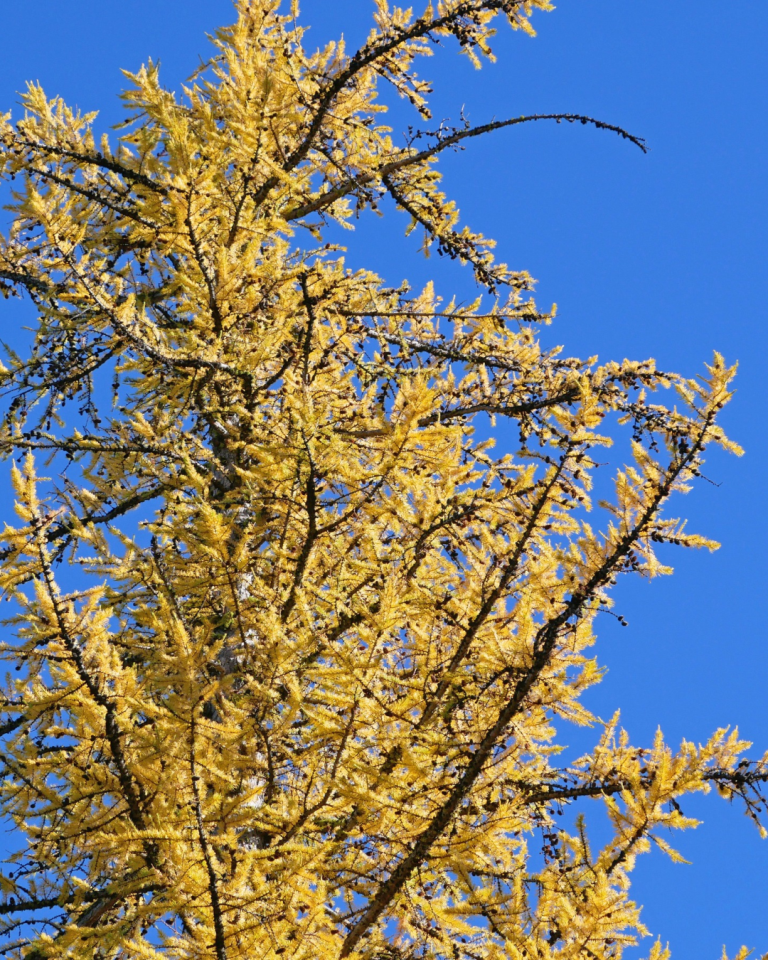 So why do some conifers drop their needles while most do not? There are advantages to doing so in areas that are covered in deep snow and swamps that flood during the winter. Shedding foliage benefits trees growing in these harsh conditions by significantly reducing water loss, and nullifying wind and cold damage. While growing new foliage every spring is more energy intensive than retaining needles over several years, the softer foliage that deciduous conifers bare takes less energy to create and is better at photosynthesizing than the waxy evergreen needles of a pine or fir. And for certain deciduous conifers, the lack of canopy cover during the winter lets sunlight through to melt away snow cover earlier in the spring than is the case for evergreen conifers. This gives them a longer growing season in snowy areas.
Here are the deciduous conifers:
Glyptostrobus
Glyptostrobus pensilis (Chinese swamp cypress) is found in shallow swamps in southeast Asia where it is critically endangered and is the only surviving species in the genus. They are tall and narrow trees which forms pneumatophores, or “knees,” the distinct growth around the base of the tree reaching up above the standing water into the air to help get oxygen to the roots. This species is slow growing and not very cold hardy but is possible to grow in a Pacific Northwest garden. Fall color is a russet orange.
Larix
Larix (larches) are the odd ducks among deciduous conifers in being relatively species rich (10 or so), wide ranging (across the northern parts of North American and Eurasia and down into the Himalayas), and extremely cold adapted. In Washington, we have two species occurring naturally, one in the forests on the east side of the Cascades and one up into the high mountains.
Larch can be good growers in gardens, but they dislike long humid summers and most will grow better in cold climate gardens where they can be given a proper winter rest. Certain species are more adaptable and so more commonly cultivated than others and there are numerous cultivars featuring prostrate, stunted, gnarled, and weeping growth.
As a testament to the usefulness of dropping foliage to survive harsh winters, larches grow farther north than any other trees. The single most northerly known tree, a Dahurian larch, is a sprawling thing eking out a living at about 73 degrees North in the middle of Russia not far from the Arctic Ocean.
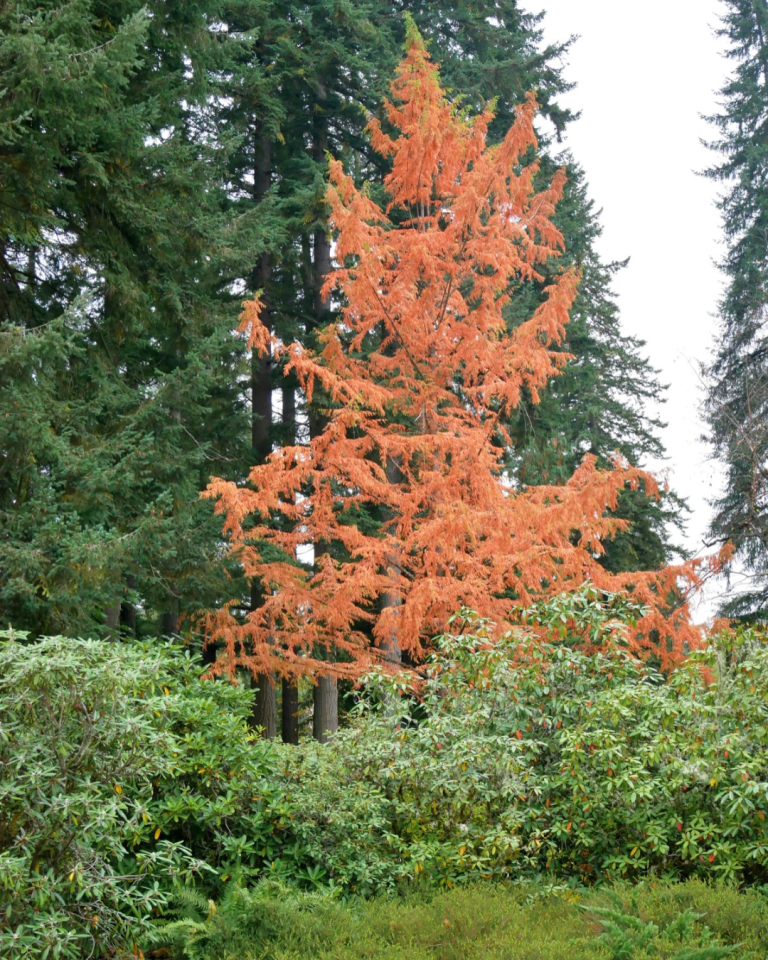 Metasequoia
 glyptostroboides (dawn redwood) is the only remaining species in its genus and a remarkable tree. First known and named from fossil records, it was presumed to be long extinct until living trees were documented in a remote valley in central China in the mid 1940’s. We have fossils of this plant here in Washington state, and in fact it was one of the most common trees across the northern hemisphere in its heyday. It boggles my mind to consider these trees grew almost everywhere 80 million years ago, retreated to a small area of China in the present day where they are on the verge of extinction, and have over about 80 years spread out across the world again in gardens due to human activity. What a world!
Dawn redwood is both very cold and heat tolerant and grows fast and easy in the garden where it quickly becomes a large tree. A number of cultivars can be found which exhibit stunted growth and variegation. Like Glyptostrobus and Taxodium, fall color is russet orange.
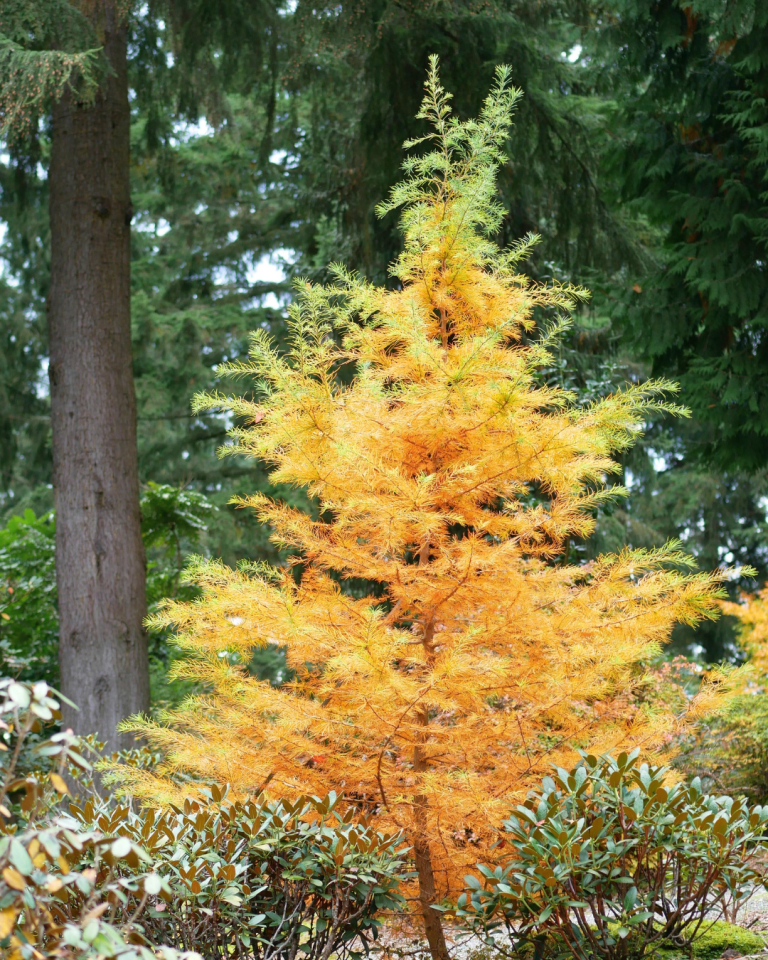 Pseudolarix The sole species, Pseudolarix amabilis (golden larch), is native to China and is a great garden plant that is much more adaptable than the various species of larch. With both heat and cold tolerance, it can be grown from the humid southeastern states up to the colder northern states. The oldest and largest specimens in North America are found at Arnold Arboretum in Boston. They also grow very well in our temperate coastal climate here in the Pacific Northwest. Along with the larches, Pseudolarix offers the most striking fall color of the deciduous conifers and is one of the first to color up.
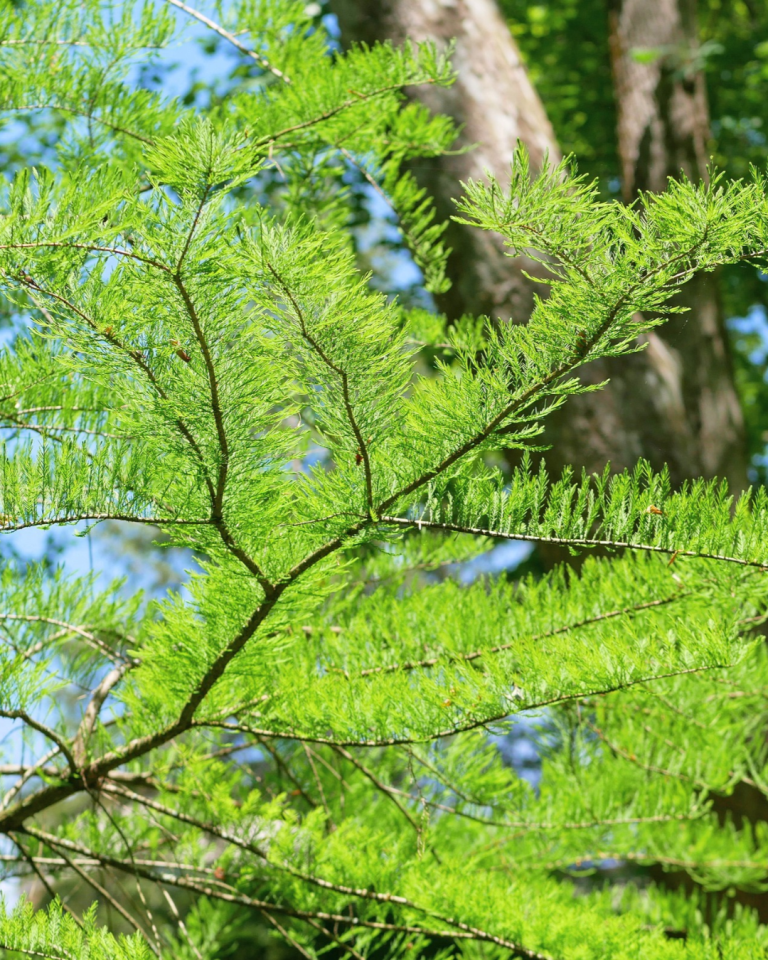 Taxodium
 (bald cypress) contains 2 or 3 species native to the southeastern US, Mexico, and Guatemala. Somewhat similar to Glyptostrobus in appearance and habitat preference, bald cypress differs in having a much more stable and robust wild population while in cultivation having much better cold hardiness and growing faster. In the wild, these trees can be massive, forming stout buttressed trunks. The tree with the widest trunk in the world is a Montezuma bald cypress named El Árbol del Tule, measuring about 138 feet in circumference. In the garden, there is no need to factor in that much room for one! Numerous cultivars are available. Fall color is a russet orange.