Rhododendron Species Botanical Garden
  • About
    • Garden Overview
    • Mission
    • Staff
    • Board
    • History
    • News & Media
      • RSBG Newsletters
      • The RSF Yearbook
    • Press Kit
    • Employment Opportunities
    • Contact Us
  • Visit
    • Hours, Rates & Directions
    • Visitor Center and Shop
    • RSBG Nursery
    • Tours
    • Garden Etiquette
    • FAQS
  • Events
    • Pop-up Plant Vendor Weekends
    • Blue Poppy Day
    • Mother’s Day Weekend
    • ART in the Garden & Plant Sale
    • Evening in the Garden
    • Fall Foliage Festival
    • Fall Clearance & Rare Plant Sale
    • Webinars
    • Symposium
    • Classes
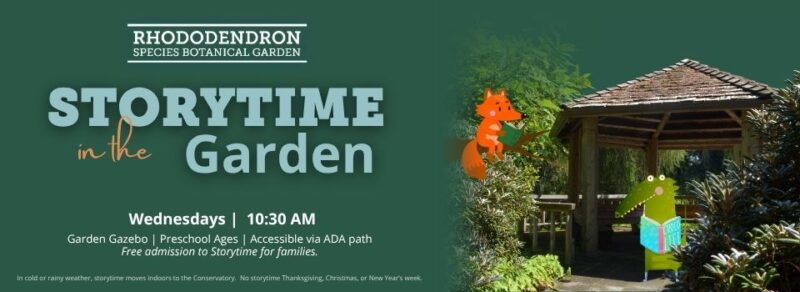
    • Story time in the Garden  
  • Explore
    • Garden Overview
    • Garden Map
    • Garden Guides
    • Garden Seasons
    • Gallery
    • The Victorian Stumpery
    • Rutherford Conservatory
    • Lawrence J. Pierce Library
  • Learn
    • About Rhododendrons
    • Plant Collections Data
    • Plant Care Library
    • Gallery
    • Lectures
    • Kids & Families
    • Steve’s Blog – Hootmanodendron
    • Staff Blog – Plant Happenings
  • Participate
    • Become a Member
      • Membership Options
      • Membership Form
      • Associate Membership Form
      • Renew
    • Make a Donation
    • Volunteer
  • SHOP
    • Plant Catalog
    • Order Pollen
    • My Shop
    • Make a Donation
    • Become a Member
    • Visitor Center and Shop
    • Cart
    • Checkout
    • My Account
  • JOIN
  • Login

Order Now

Fall is fun for KIDS


Check outALL of our upcoming EVENTS

rhodygarden

Botanical garden with the world’s largest collection of Rhododendron species, tropical conservatory, blue poppy meadow, plant shop, stumpery, & more.

Did you know: These slugs are on a date. If you h Did you know: These slugs are on a date.

If you happen to spot two slugs intertwined on a cool, damp day at the Garden, you may be witnessing one of nature's more unusual reproductive strategies.

Slugs are hermaphrodites, meaning each individual has both male and female reproductive organs. During mating, two slugs intertwine and exchange sperm. Their bodies can become tightly wrapped around one another, accompanied by a remarkable amount of mucus and specialized reproductive structures.

After mating, each slug can go on to lay eggs, meaning both individuals have the potential to produce offspring.

Fall's cool, wet conditions can bring slugs out into the open, making this a good time to slow down and look closely at what is happening beneath your feet. There is a lot more going on in the Garden than meets the eye.

#DidYouKnow #GardenWildlife #SlugBiology #Gastropods #PacificNorthwest #SlugLife  #NatureAtTheGarden #RSBG #RhododendronSpeciesBotanicalGarden
🌿 Guess the Plant! Think you know your rhododendr 🌿 Guess the Plant!

Think you know your rhododendrons? Let’s see if you can identify this week’s mystery species.

This compact and rarely grown species is a particularly striking example of a rhododendron that doesn’t need to be large to stand out. Its new growth is especially eye-catching, while its flowers arrive later in the season.

Hints...
🍃 Its rounded leaves are unusually thick, firm and leathery, with a short, broad petiole.

💙 Watch for the new growth. It emerges a striking glaucous blue-green, making this species an attractive foliage plant even when it isn't in flower.

🌸 In early summer, it produces pink, funnel-bell-shaped flowers. It is a relatively late-blooming species and can begin flowering at a surprisingly young age.

🌿 It grows as a dwarf, compact evergreen shrub and is considered cold hardy and relatively easy to grow when given light shade or morning sun.

🌏 This rare species is native to Guangxi, China, and is considered critically endangered in the wild.

Can you guess the plant?

Drop your answer in the comments, and we’ll reveal it tomorrow.

#GuessThePlant #RSBG #RhodyGarden #Rhododendron #SpeciesRhododendron #PlantID #PlantLovers #RarePlants #BotanicalGarden #RhododendronFlowers #PNWGardening #PacificNorthwest
Some flowers demand attention. Others make you sto Some flowers demand attention. Others make you stop and look a little closer.

Illicium ‘Woodlander’s Ruby’ is one of the longest-blooming of the anise trees, opening ruby-pink, star-shaped flowers from spring into fall on long, slender stalks. The flowers are especially striking up close, with narrow petals radiating around a delicate center.

This unusual flower is easy to miss if you’re focused on the larger blooms around the Garden. But that’s part of the fun of exploring in fall. There are always smaller details waiting to be discovered.

Like other Illicium species, ‘Woodlander’s Ruby’ is toxic if ingested, so enjoy its unusual beauty without tasting any part of the plant.

📍You can find Illicium ‘Woodlander’s Ruby’ near the Azalea Loop in the Garden. Stop by, take a closer look, and see what else you might discover along the way.

#RSBG #RhododendronSpeciesBotanicalGarden #Illicium #WoodlandersRuby #StarAnise #BotanicalGarden #PlantPhotography #GardenPhotography #PacificNorthwestGarden #FallGarden #PNWGardens
FALL PLANT CATALOG: FOUR PLANTS TO ADD TO YOUR GAR FALL PLANT CATALOG: FOUR PLANTS TO ADD TO YOUR GARDEN

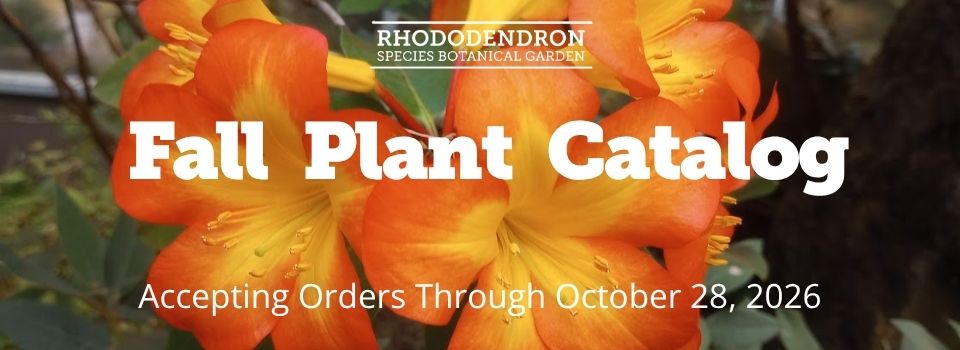
Fall is a great time to plant, and there’s still time to explore the 2026 Fall Plant Catalog.

This season’s catalog includes documented and verified Rhododendron species, companion plants, and unusual offerings from the RSBG collection. Here are four plants featured in the catalog that caught our eye:

🌸 Rhododendron davidsonianum
A beautiful species covered in clusters of soft pink flowers, making a spectacular spring display.

🌸 Rhododendron degronianum ssp. yakushimanum
A compact species with dense, dark green foliage and beautiful white to pale pink flowers. A classic species for the garden.

💜 Rhododendron huanum
A stunning species covered in masses of lavender-purple flowers. Large-size plants are available for pickup, making this a great opportunity to bring home an established specimen.

🌿 Pyrrosia davidii
A beautiful fern with long, narrow green fronds that brings texture and year-round interest to a woodland garden.

Whether you're looking for a new rhododendron species, a distinctive foliage plant, or something unusual for your woodland garden, there’s plenty to discover.

The Fall Plant Catalog is open for orders through October 28, 2026.
Explore the catalog and find something special for your garden.

Shop the 2026 Fall Plant Catalog:
https://shop.rhodygarden.org/

#RSBG #RhodyGarden #FallPlantCatalog #Rhododendron #SpeciesRhododendron #PyrrosiaDavidii #RhododendronDavidsonianum #RhododendronDegronianum #RhododendronHuanum #RarePlants #UnusualPlants #WoodlandGarden #PlantShopping #PacificNorthwestGardening
Did you know? That bright yellow blob on the mul Did you know? 

That bright yellow blob on the mulch might be Fuligo septica, also known as dog vomit slime mold. It isn’t a fungus, plant, or animal. It’s a slime mold: a living mass that moves across damp mulch and feeds on bacteria and other tiny organic matter.

After warm, wet weather, it may appear suddenly. As it dries, it darkens and forms a powdery surface that releases spores. It might look alarming, but it doesn’t harm garden plants. It’s generally harmless to people, animals, and plants, though its spores may bother people with allergies or respiratory sensitivities. 

Dog vomit slime mold helps decompose organic material into nutrients usable in the soil. Researchers are studying its ability to accumulate and bind certain metals, as well as compounds with potential medical uses

The slime's body naturally deteriorates when it dries out from lack of moisture, but if you’d rather remove it then scoop or scrape it into the trash and let the area dry. It may return, since spores spread easily. Most of the time, you can simply leave it be.

And no, this one isn’t a rhododendron. The Garden has plenty of fascinating stories beyond the Rhododendron collection! 🌿

#DidYouKnow #SlimeMold #FuligoSeptica #GardenCuriosities #PacificNorthwestGardening #RSBG
NATURAL VARIEGATION: A LITTLE BOTANICAL SURPRISE NATURAL VARIEGATION: A LITTLE BOTANICAL SURPRISE

One thing most plant lovers can agree on: natural variegation is hard to resist.

Sometimes it appears as a bold splash of cream across a leaf. Sometimes it shows up as delicate speckles or streaks, turning an otherwise ordinary leaf into something completely unique.

Natural variegation occurs when a plant develops areas of differently colored tissue, often creating patterns of white, cream, yellow, or lighter green against the surrounding foliage. And unlike a cultivated variegated form, these patterns can appear naturally on individual plants or even individual leaves.

That unpredictability is part of the fun. You never quite know what you’re going to find.
These are the kinds of details that make walking through the Garden worth slowing down for. Look beyond the flowers and take a closer look at the leaves. You might find something unexpected.

Which type of natural variegation is your favorite?

#RSBG #RhodyGarden #NaturalVariegation #VariegatedPlants #PlantLovers #PlantNerd #BotanicalGarden #PlantDetails #Foliage #RarePlants #UnusualPlants #PlantCollections #GardenDiscovery #PacificNorthwestGardening
NOW (RE)BLOOMING: RHODODENDRON OCCIDENTALE & RHODO NOW (RE)BLOOMING: RHODODENDRON OCCIDENTALE & RHODODENDRON SERRULATUM

Think rhododendrons are finished blooming for the year? Think again.

Two species are putting on a beautiful rebloom in the Garden right now: Rhododendron occidentale (the western azalea), and Rhododendron serrulatum (the summer azalea).

While spring brings the Garden’s biggest wave of rhododendron flowers, some species have a second act. These late-season blooms are a reminder that there is always something changing in the Garden, even as we move into fall.

If you’re visiting this week, keep an eye out for these two species and see what else you can discover along the way.

Come curious. Leave inspired.

#RSBG #RhodyGarden #NowBlooming #RhododendronOccidentale #WesternAzalea #RhododendronSerrulatum #Rhododendron #SpeciesRhododendron #FallGarden #GardenInBloom #BotanicalGarden #PacificNorthwestGardening #ExploreTheGarden #pnwgardens
Join us next Thursday, October 8 at 5 p.m., for ou Join us next Thursday, October 8 at 5 p.m., for our October webinar:

Aotearoa: A Horticultural Journey through the Land of the Long White Cloud

Presenter Emily Joseph will take us on a horticultural journey through Aotearoa, New Zealand.

Our website is temporarily down for repairs, so please register by calling 253-838-4646 or emailing info@rhodygarden.org. We apologize for the inconvenience and hope you can join us!

#RSBG #GardenWebinar #Horticulture #Aotearoa #NewZealand #PlantLovers #BotanicalGarden
Follow on Instagram

HOURS

10 am - 4 pm
Tuesday - Sunday
Closed: Mondays

Closed : Thanksgiving,
day after Thanksgiving,
Christmas Eve, Christmas Day,
December 31 (New Year’s Eve),
New Year’s Day, 4th of July

ADMISSION

$12.00   General Admission
$9.00     Seniors (65+) &
                 Students (w/ school ID)
Free:     Children under 12 years, school groups, RSBG members and military personnel (active and retired) with ID. Admission required for military dependents over 12 years of age.
The RSBG is only accepting credit cards for admissions, plants, and gift shop purchases at this time. Thank you for your understanding.

LOCATION

map
Interactive Map

CONTACT

Office: 253-838-4646
Visitor Center: 253-838-4646 x 140
Fax: 253-838-4686
Mail:
PO Box 3798
Federal Way, WA 98063
 
Email: info@rhodygarden.org
Contact Us

(c) 2026 Rhododendron Species Botanical Garden – Where the Wild Things Grow!

Rhododendron Species Botanical Garden
x
Top
  • Events+
    • Spring Plant Sale
    • Mother’s Day Weekend
    • Blue Poppy Day
    • Symposium
    • Evening in the Garden
    • Fall Foliage Festival
    • Member Appreciation Day
    • Upcoming Events
  • Calendar
  • Forms
  • My Account
  • Admin
  • Contact Us

Shopping Cart