
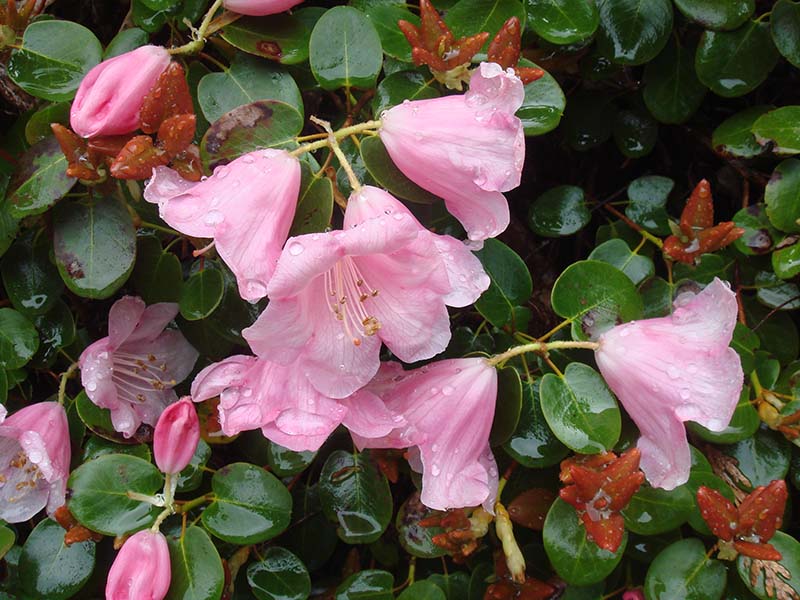
1966/606: A specimen originally from the Caerhays Castle collection in Cornwall, England. This form features delicate rose pink, bell-shaped flowers and is considered a highly ornamental if not simply historic selection.
1973/301: This is the lowest growing/most compact form of the species in the RSBG collection with light pink bell-shaped flowers in spring, though its provenance is unknown.
1975/277: Yu# – A wild collected form from China originally collected in 1938-1939 by Te-tsun Yu, noted Chinese botanist and co-founder of the Kunming Institute of Botany. This form is one of the larger flowering forms with pale rose pink blooms.
1975/307:For those looking for darker, more intensely saturated color in the flowers, this is one of the larger flowering forms with the darkest pink blooms, originally from the collection of James Barto, an early and avid collector and cultivator of the genus Rhododendron.
1980/055: W#1350 – The type of the species (the first scientifically described specimen) from Ernest Wilson collected on his 1906-1909 expedition to Hubei and Sichuan, China. This selection came to the RSBG from Borde Hill Gardens in the UK. It is one of the smallest-leaved forms with the palest pink flowers.
1984/004: From Arduaine Garden in Scotland, this form has the largest flowers for this species in the RSBG collection, which open until almost flat-faced. The rounded foliage is also much larger than the typical foliage form.
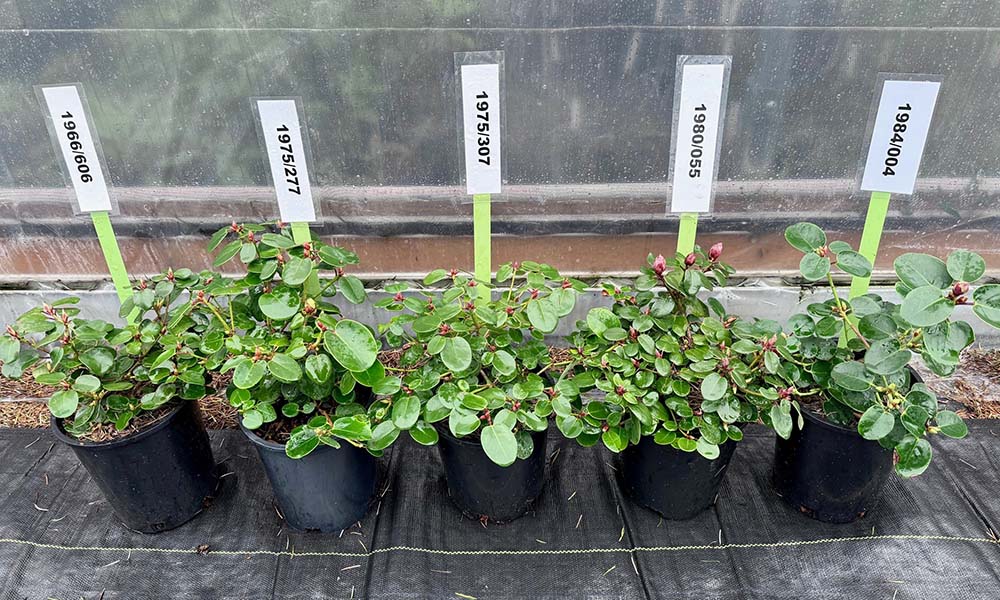
As you can see, each numbered accession has a distinct botanical provenance or defining characteristic. Features like flower color and size/habit can significantly influence garden design so considering the differences between each offering is important when designing for a specific aesthetic or space.
In addition, visual traits and hardiness in the landscape are often sought after by hybridizers aiming to breed showier, more adaptable plants for commercial use. Each parent plant contributes desirable characteristics to their hybrid offspring. Rhododendron williamsianum has long been used in hybridizing, producing some stellar cultivars originally introduced in the 1950s and 1960s that remain available today.
Rhododendron ‘Kimberly’ is an F1 hybrid (a first generation cross between two wild species) of R. williamsianum x R. fortunei ssp. fortunei. It features a compact, mounding habit, ovate foliage and deep pink, bell-shaped fragrant flowers that fade to white. In this cross, williamsianum contributes most of the habit, foliage and flower traits, while the genetics of fortunei enhance the flower size and provide fragrance. Rhododendron ‘Moonstone,’ another F1 hybrid, this time between R. campylocarpum x R. williamsianum, offers ovate leaves, a compact habit, and creamy yellow flowers flushed pink. Here campylocarpum contributes the genes necessary to achieve a yellow flowering form. ‘Cowslip,’ a cross with Rhododendrdon wardii, also produces pale yellow to creamy white blooms. Other hybrids such as ‘April Glow,’ ‘Bow Bells,’ and ‘Hummingbird’ remain popular in retail nurseries, providing gardeners with the standout traits of the species parent while having tough and tolerant constitutions in the landscape.
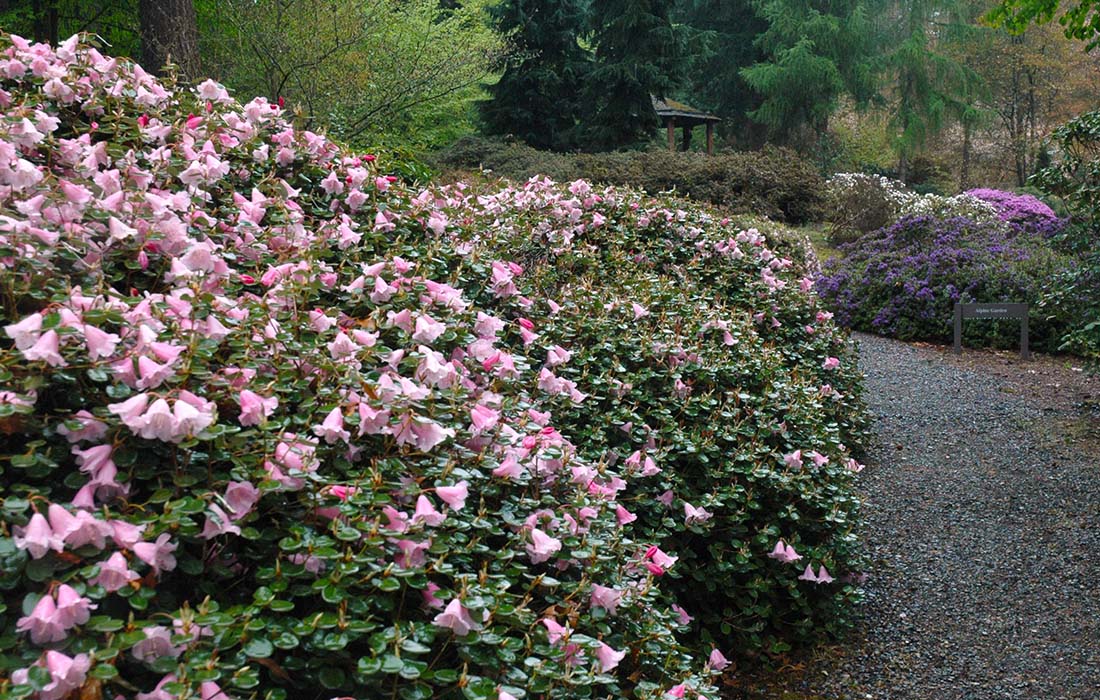
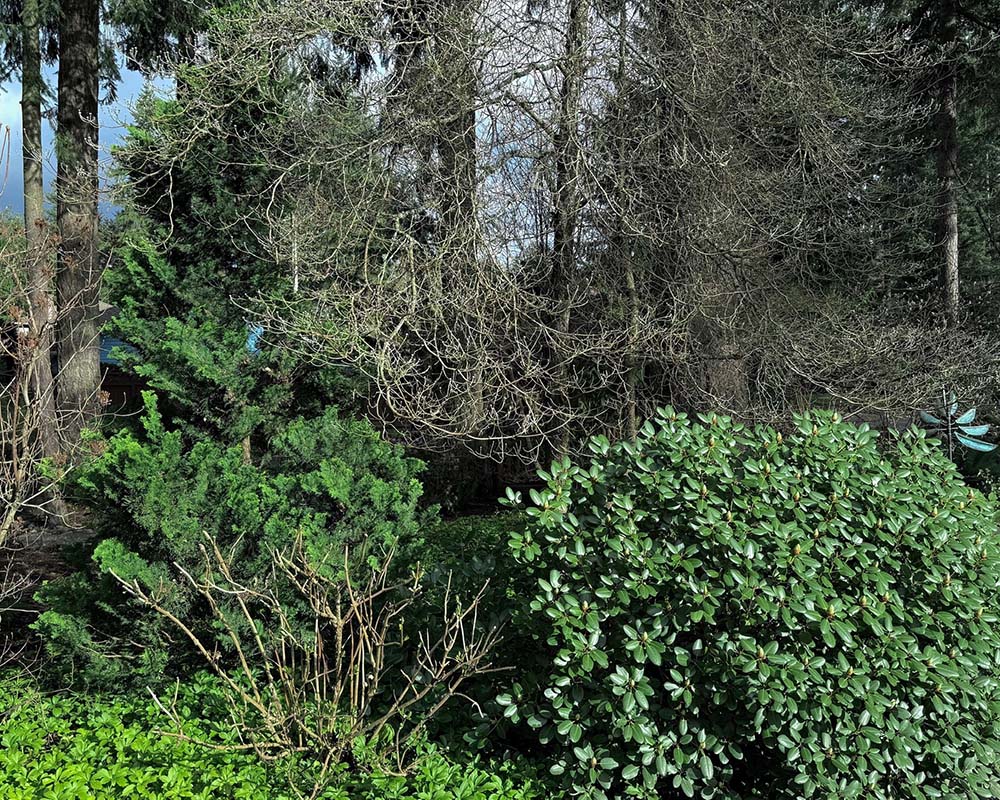
Whether you decide to grow a true williamsianum or a hybrid like ‘Moonstone,’ this attractive and adaptable group of plants deserves a notable place in ornamental gardens and designed landscapes. As always, both hybrids and species are available in our retail nursery behind the Visitor Center, which is open year-round to the public without requiring garden admission to visit. It is especially meaningful to know that when you plant an accessioned Rhododendron williamsianum, you are bringing home a small piece of botanical history, along with the RSBG’s living legacy, to continue growing in your own garden.
Cox, P. A., & Cox, K. N. E. (1997). The Encyclopedia of Rhododendron Species. Glendoick Publishing.
Rhododendron williamsianum. Trees and Shrubs Online. Retrieved March 25, 2026, from
https://treesandshrubsonline.org/articles/rhododendron/rhododendron-williamsianum/.
Wilson, E. H., & Sargent, C. S. (1988). Plantae Wilsonianae: An enumeration of the woody plants collected in western China for the Arnold Arboretum of Harvard University during the years 1907, 1908, and 1910. Dioscordies Press.