
By RSBG Nursery Manager & Assistant Curator, Atsuko Gibson
My Favorite Rhododendron
I always get asked this question: “What is your favorite rhododendron?”
Out of 1300 species, it is nearly impossible to narrow it down to a single favorite, but my answer is always the same: Rhododendron quinquefolium. It is a deciduous, five-leaved azalea.
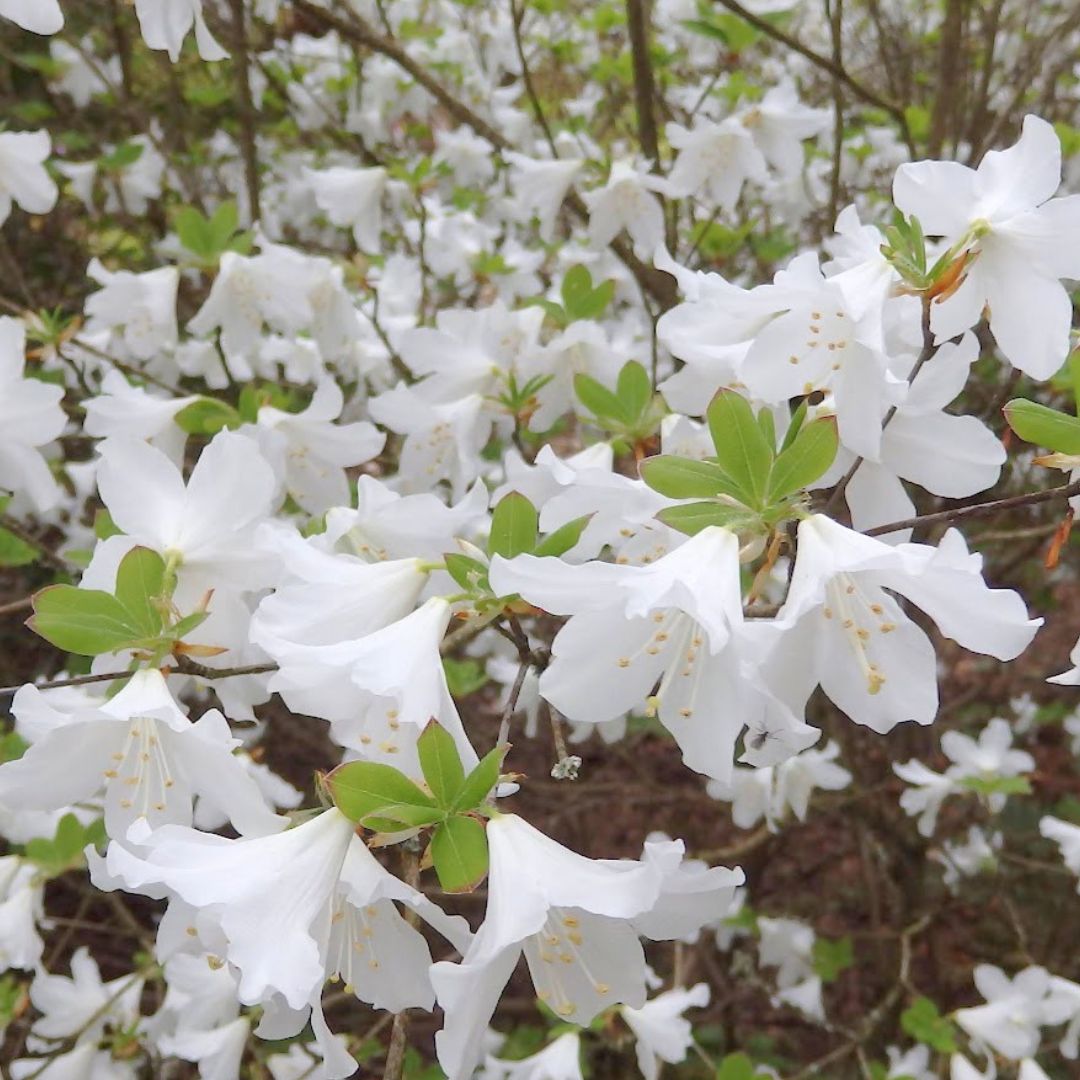
What is so special about this rhododendron? It is native to my home country, Japan. When I lived in Japan, before I moved to the US for college, I didn’t know anything about rhododendrons. Now, whenever I visit my family, I take every chance I get to hike in the mountains to see wild rhododendrons.
I have seen R. quinquefolium in the wild several times and in different regions, but the first time I saw it in the wild, it absolutely blew my mind. I found them growing as small trees, with bonsai-like structures and gnarly branches. Knowing that this species grows only an inch or two a year, those trees must have been ancient. The mature bark is also worth noting—it resembles pine bark.
The white, bell-shaped flowers are borne before the leaves emerge in mid-spring. I have observed some variation in the flowers in the wild, including differences in corolla size and shape, the color of the speckles, and even the color of the corolla. I have read about cream-colored flowers and witnessed some with a faint pink flush.The flowers may not last long, but when they put on a show, it is beyond spectacular. But be patient—they will not start blooming heavily until they are at least 12–15 years old.
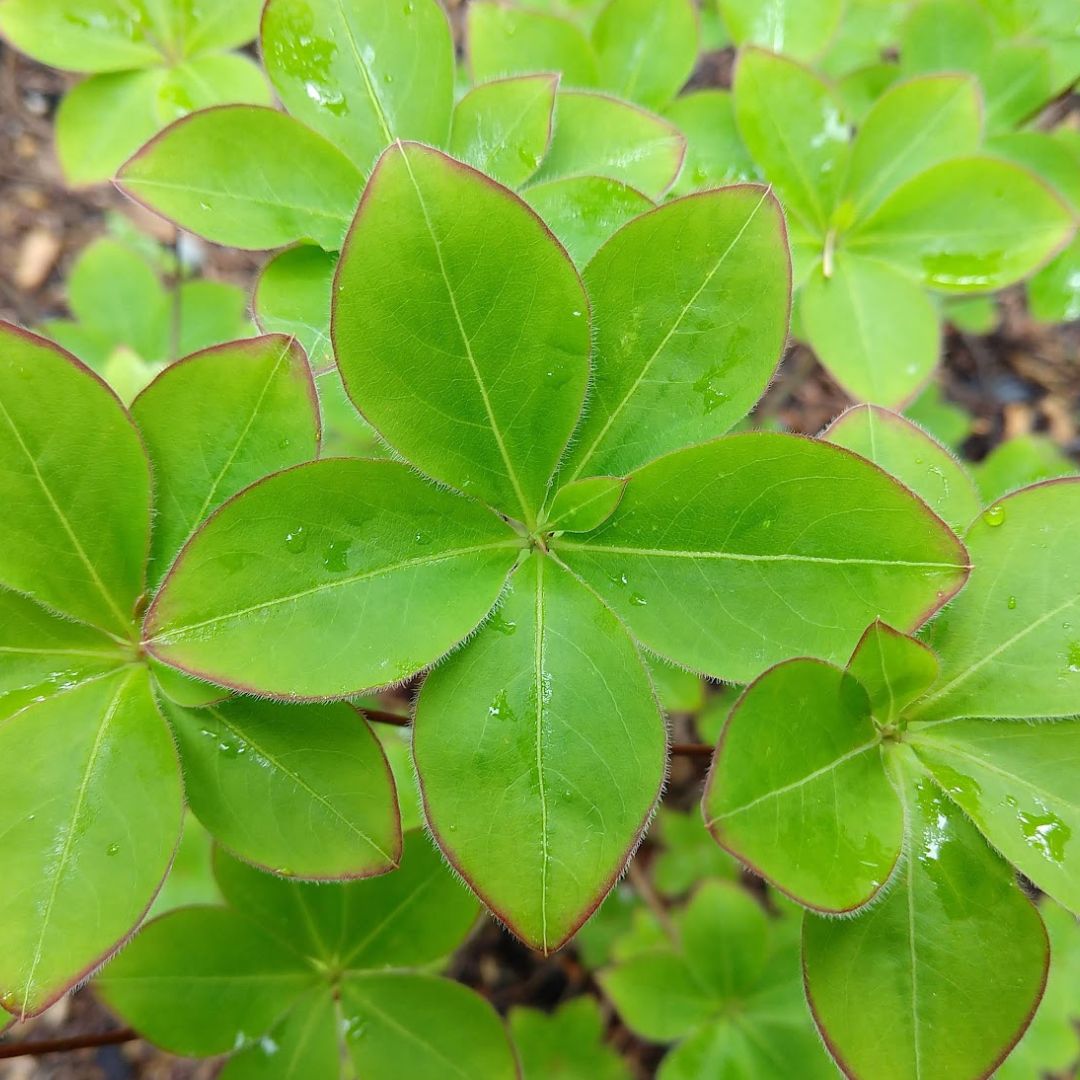
The leaves are arranged in whorls of five, as the specific epithet suggests. The leaves are usually tinged with a reddish margin when they first emerge. Some literature suggests that this may be related to maturity or light conditions, but observations in the wild and in cultivation suggest otherwise.
Then comes fall. The leaves turn a brilliant orange-red or scarlet, somewhat resembling the fall color of Enkianthus. In my opinion, R. quinquefolium has some of the best fall color in the entire genus, along with other species in section Sciadorhodion, such as R. pentaphyllum, R. schlippenbachii, and R. albrechtii.
In October 2025, Steve Hootman and I visited the Kii Peninsula in Japan to witness its spectacular fall color in the wild. The mountain slopes were dyed scarlet, all thanks to R. quinquefolium. It was a scene I will never forget.
So, do I have this favorite rhododendron of mine in my garden? You betcha.
They are best grown in afternoon shade, with protection from rabbits—and, in my case, dogs running after rabbits. They are slow to mature, but the patience is worth it. I hope you will enjoy and cherish this species as much as I do.