
By Will Clausen, Horticulturist & Assistant Curator
Spring is in full swing with summer nearly upon us and if you’re anything like me, then the urge to get out and see wild plants in our beautiful region is seriously building! It’s well known that coastal Pacific Northwest is a great place for growing rhododendrons in gardens, but this is also a great place for seeing rhododendrons growing in the wild. These are the species to look for if you are out on a hike.
Wild rhododendrons of Washington
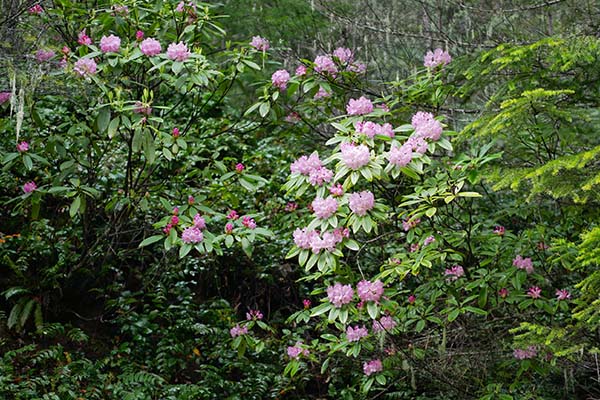 Pacific rhododendron (Rhododendron macrophyllum)
The Washington State Flower and one of the most iconic plants growing in the Puget Sound forests. This is our one “typical” looking rhododendron found in the wild. An evergreen shrub generally to about 10-15 feet tall, it can sometimes grow like a small tree when in deep shade. Bright pink flowers show in Washington from May to June depending on elevation. The Dosewallips and Dungeness Rivers are great places to see them, but really any river valley on the east side of the Olympic Peninsula or woodland throughout the Kitsap Peninsula are good places to look.
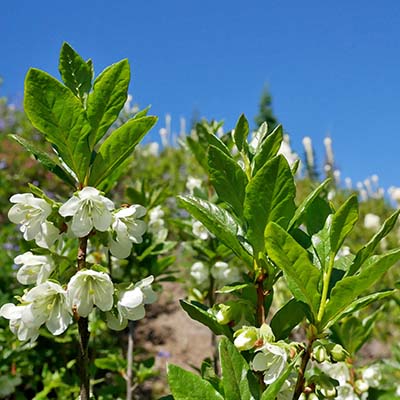
Cascade azalea (Rhododendron albiflorum)
This is an unusual looking deciduous azalea found in subalpine areas. It tends to form thickets and comes into bloom by July with white flowers along the stems underneath the leaves. The fall foliage color is a noteworthy feature of this species with plants in sunnier locations turning a bold red-orange and plants in shadier spots turning yellow. This species is widespread throughout the Cascade and Olympic Mountains. Easy places to see it include Paradise at Mount Rainier and Hurricane Ridge in the Olympics.
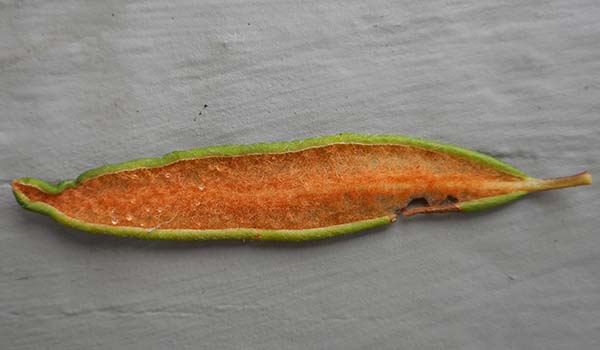
Bog Labrador tea (Rhododendron groenlandicum)
Another unusual plant that has not always been considered to be a rhododendron, and you can see why. These small evergreen shrubs are usually found along the slightly drier margins of wetlands and bogs. They have small white flowers and leaves that are usually very fragrant, smelling of pine and lemon, with a dense covering of rust-colored hairs on the bottom. Look for this in wetlands even in populated areas like West Hylebos Wetland here in Federal Way, or in quieter settings like Cape Alava out on the coast. Flowers occur late May through June.
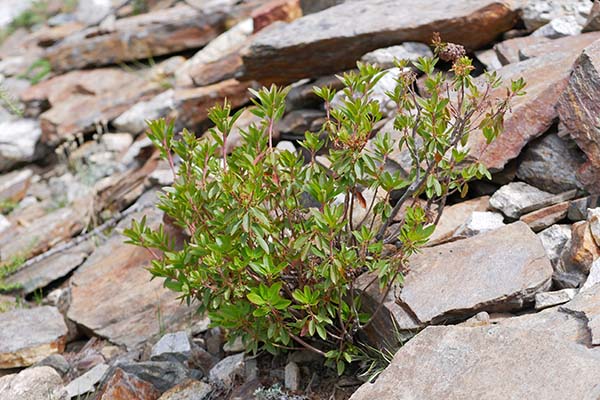
Western Labrador tea (Rhododendron neoglandulosum)
Closely related to the previous species, this plant differs in a few important ways. It is found up in the mountains, sometimes growing right out in the middle of a scree field, but more often near subalpine wetlands. Its smaller leaves lack the covering of rust-colored hairs and are a different shape than bog Labrador tea. Found east of the Cascade Crest in places like the Wenatchee, Entiat, and Chelan Mountains, it is certainly the most challenging rhododendron species to see in Washington, but it is present in the area around Washington Pass on Highway 20. Flowers mid-June through early August.
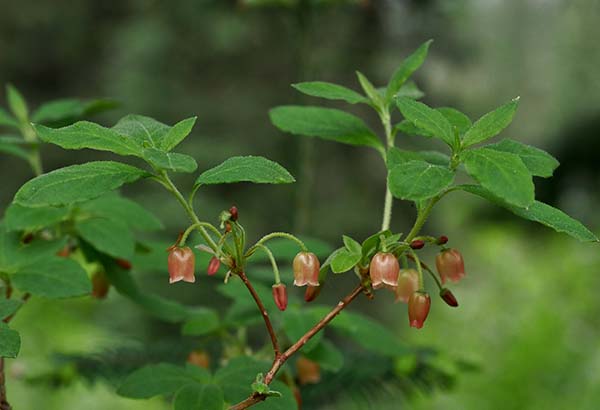 False azalea (Rhododendron menziesii)
And yet another strange wild rhododendron! You are sensing a theme at this point, I’m sure. This species has also not always been considered a rhododendron but is now listed among them. A deciduous shrub found in the forest or forest edge from the coast up into the mountains, it has small but beautiful salmon-colored flowers and often great fall foliage color. It is widespread and there are plenty of options for easy viewing, including around Snoqualmie Pass. Look for flowers there in June and July.
Wild rhododendrons farther afield in the Northwest
Rhododendrons grow wild along the west coast from southern California up through Alaska and for people exploring beyond Washington, here are additional rhododendrons to search out.
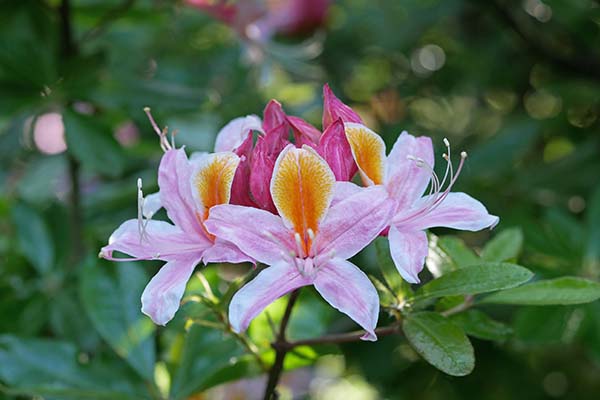
Western azalea (Rhododendron occidentale)
Along with Pacific rhododendron, this is our other “typical” looking wild rhododendron, this one having a more standard deciduous azalea look. Found from southwestern Oregon down through much of the coastal and mountainous regions of northern California, and even down into some areas in southern California, this is a remarkably beautiful (and very fragrant) species with a lot of variation in flower color and pattern. It flowers mid-May through early July depending on location and can be seen in the Yosemite Valley, Redwood National Park, and countless other places.
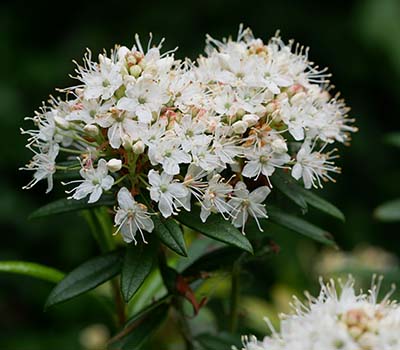 Coastal Labrador tea (Rhododendron columbianum)
Another Labrador tea, this one is an evergreen shrub found in lowland wetland and forest edge habitats near the coast from northern California through Oregon and possibly just into southwest Washington. It looks very similar to bog labrador tea but lacks rust-colored hair on the underside of the leaves. Flowers in June and July. Look for it on Point Reyes near San Francisco and many other easy to get to places along the coast.
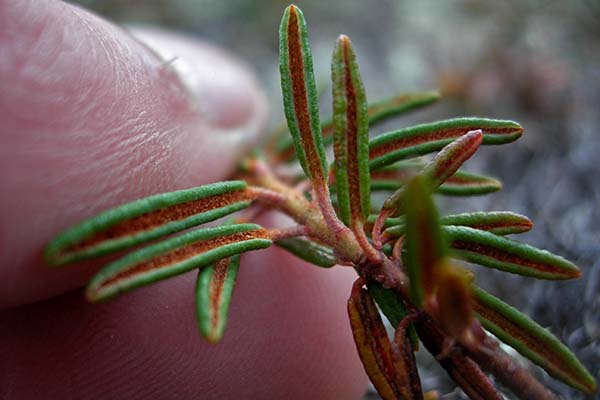
Northern Labrador tea (Rhododendron subarcticum)
And yet another Labrador tea! But this one is quite different from the rest with small (tiny!) narrow leaves featuring rust-colored hairs on the underside. This small and often ground hugging evergreen shrub intermingles with lichen and other compact alpine plants in mountains and tundra throughout central Alaska and into northern Canada. Probably most easily seen in Denali or the mountains of Chugach State Park near Anchorage. Flowers in June and July.
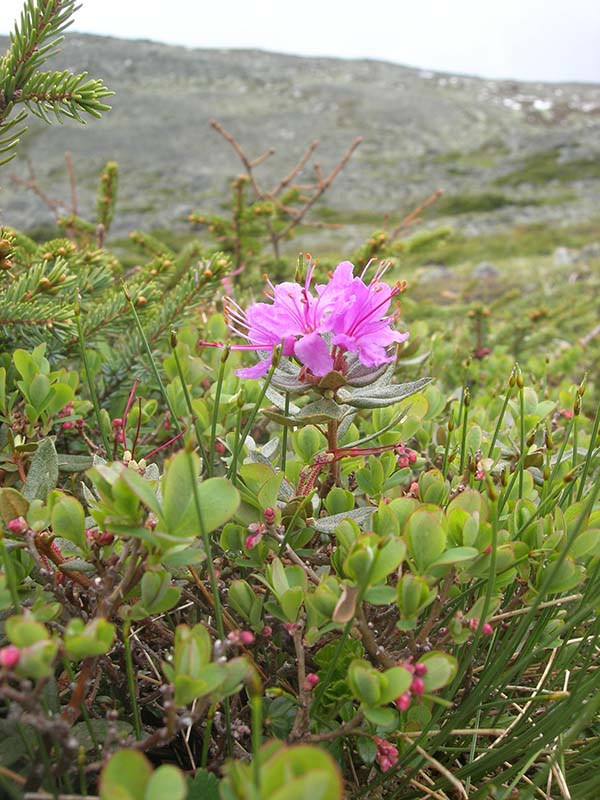
Lapland rosebay (Rhododendron lapponicum)
A super widespread species of the far north in alpine and tundra habitats. In Alaska it is commonly seen in Denali but can be found in plenty of other places in the interior, west, and north of the state. This small evergreen shrub had leaves covered with golden scales and bright violet to purple flowers which are very showy in their austere setting. Flowers occur in late spring and early summer.
Kamchatka rhododendron (Rhododendron camtschaticum)
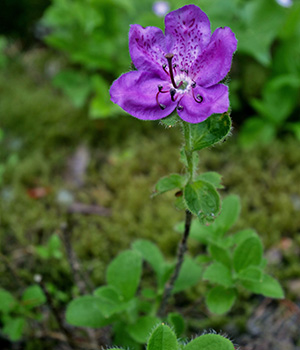
Another strange rhododendron, and perhaps the weirdest of them all. Kamchatka rhododendron flowers on new growth, unlike all other rhododendrons which set flower buds the previous summer. Some still consider this to be in a different genus, Therorhodion. In any case, it’s a low growing deciduous shrub with relatively large and showy usually pink-purple flowers found along the south coast of Alaska. Flowers in late June and July. Probably most easily seen on Kodiak Island, Unalaska in the Aleutian Islands, and around Nome.
And for those wanting to see all at once, we have most of these growing at the Rhododendron Species Botanical Garden and many of them are in bloom this month. Some of these are also available in our Plant Sales Area and in our twice a year catalog so that you can try your hand at growing them at home as well!