
Download: Plethora of Pleiones
By Atsuko Gibson
RSBG Nursery Manager and Assistant Curator
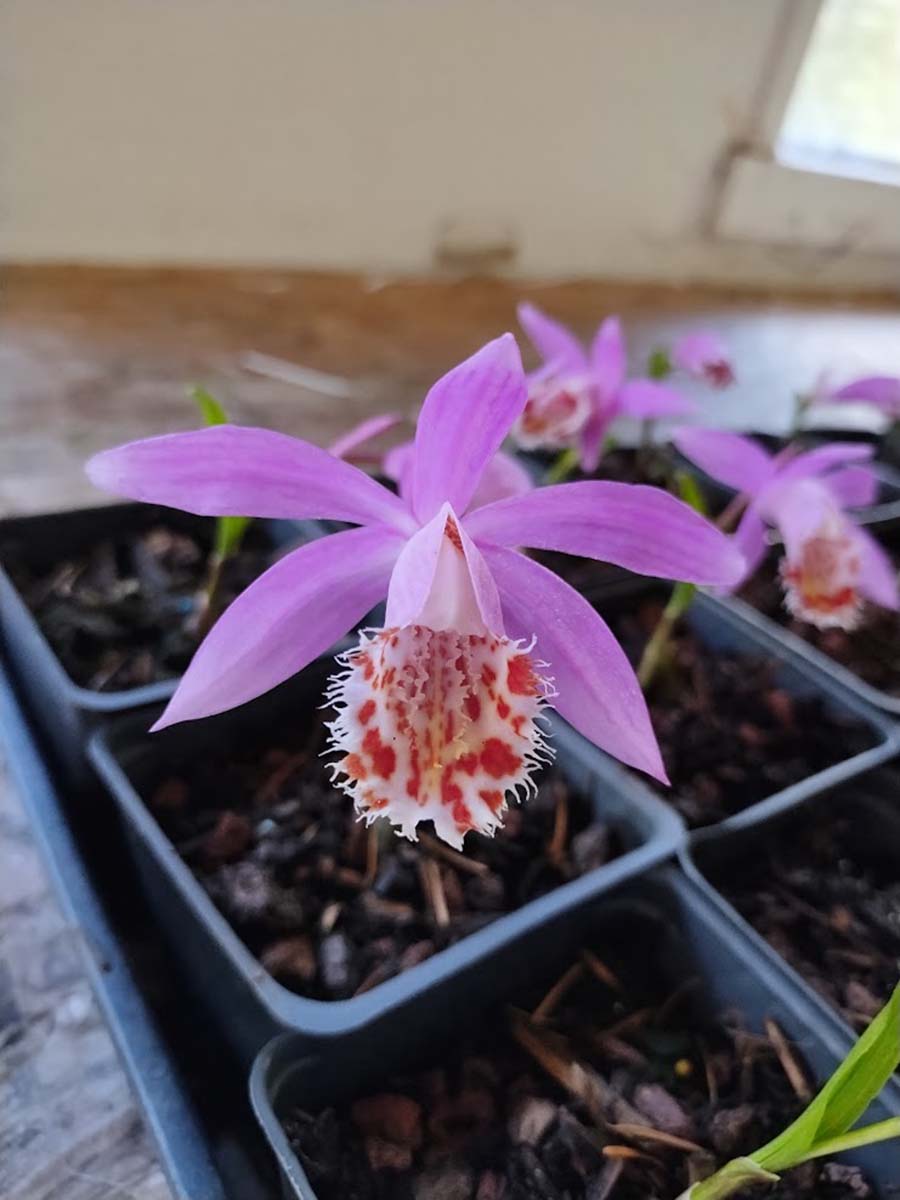
When I was first introduced to the genus Pleione during my early years at the RSBG, I was blown away. There was once a fairly large clump of Pleione formosana blooming in the Alpine Garden—nestled in thick moss. (Sadly, it’s now gone, thanks to voles.) At the time, I remember thinking it was a Cattleya orchid that could somehow be grown outdoors.
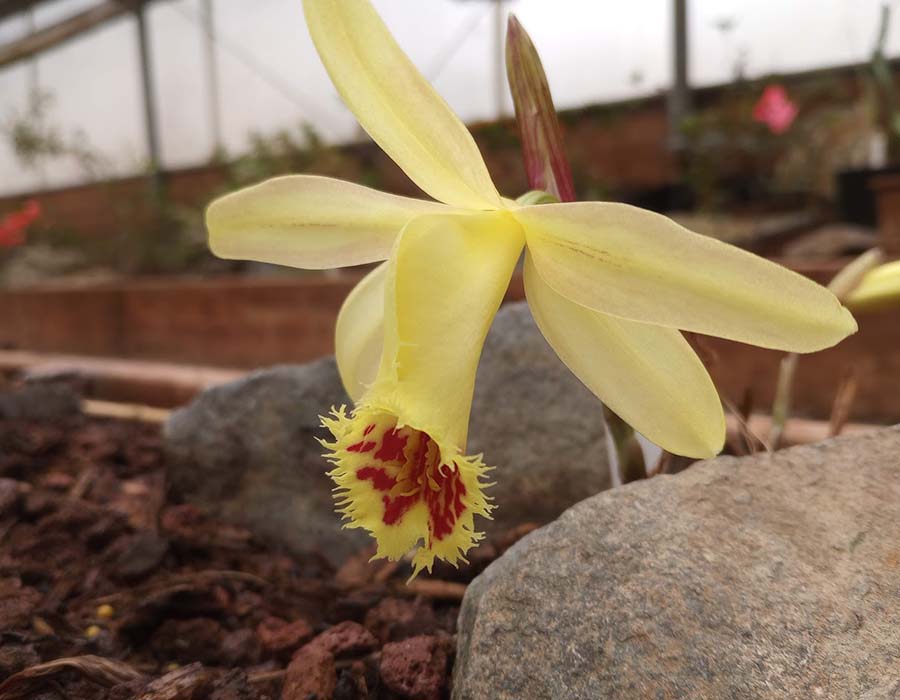
Over the past decade, we have dramatically increased our production of Pleione, thanks to a generous donation from a fellow nurseryman in Oregon. Our current inventory includes P. formosana (including a variegated form and the selected white-flowered cultivar ‘Polar Sun’), P. bulbocodioides (including the selected cultivar ‘Garratt Richardson,’ with its heavily spotted red lip), P. × confusa ‘Golden Gate,’ P. × barbarae, P. hookeriana, and P. ‘Tongariro’.
Here is how to keep them happy:
Winter dry
Keep the pseudobulbs dry during the dormant season. In containers, this can be achieved by placing pots in a garage or under the eaves of your house. In the garden, you can dig up the pseudobulbs, remove dead roots, and store them dryish in a plastic bag in the refrigerator over winter.
Grow them in a retaining wall
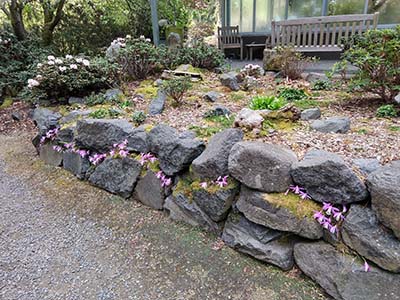
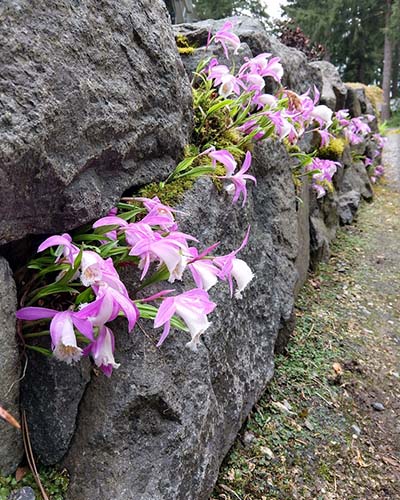
We grow our P. formosana tucked between large stones in a retaining wall. When we planted them eight years ago, we simply inserted small dormant pseudobulbs under the moss. The overhead stones naturally shed winter rain, and now we have a show-stopping display every April.
 Light
Light
Pleione grow best in light shade.
Watering
Begin watering when new foliage emerges. Until then, no watering is needed, as this can result in rotting the pseudobulbs. When there is no foliage, there are no active roots. This is also why the roots can be completely removed before storing the pseudobulbs in the refrigerator for winter.
Slug protection
A light application of slug bait every few weeks during the growing season helps prevent damage.
Epiphytic nature
In the Himalayas and Chinese mountains where they are native, Pleione will grow epiphytically on mossy tree trunks, nurse logs, or rocks. This means they require excellent drainage—use a coarse, open growing medium.
Cold tolerance
Pleione are generally winter hardy in the Pacific Northwest, except during unusually severe cold spells. Our outdoor P. formosana have tolerated temperatures down to 18°F without issue, but they may suffer below that. I grow mine in a trough at home, and when temperatures are expected to dip into the low 20s, I move it into the garage.
 Propagation
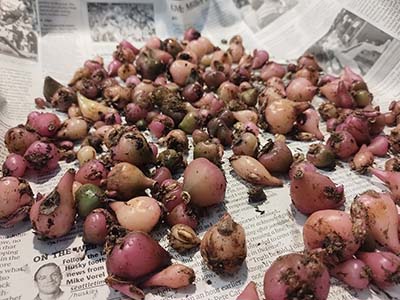
The pseudobulb will die after it blooms, much like Cardiocrinum or Agave. However, it produces several daughter bulbs, so the life cycle continues. These offsets take a few years to reach blooming size, but once established, you can increase your stock fairly quickly from a single plant.