
by Steve Hootman
The genus Mahonia is one of the primary subcollections here at the RSBG (Rhododendron being the primary collection of course). There are around 70 species of Mahonia and these occur from the Himalaya Mountains into southeastern Asia and in North and Central America. The mahonias (sometimes included in the genus Berberis) are known here in the Pacific Northwest as Oregon Grapes and are represented in cultivation primarily by two species, at least on the west side of the Cascades. These are Mahonia aquifolium and Mahonia nervosa with the latter being the only representative of the Asian clade of the genus in the entire western hemisphere.
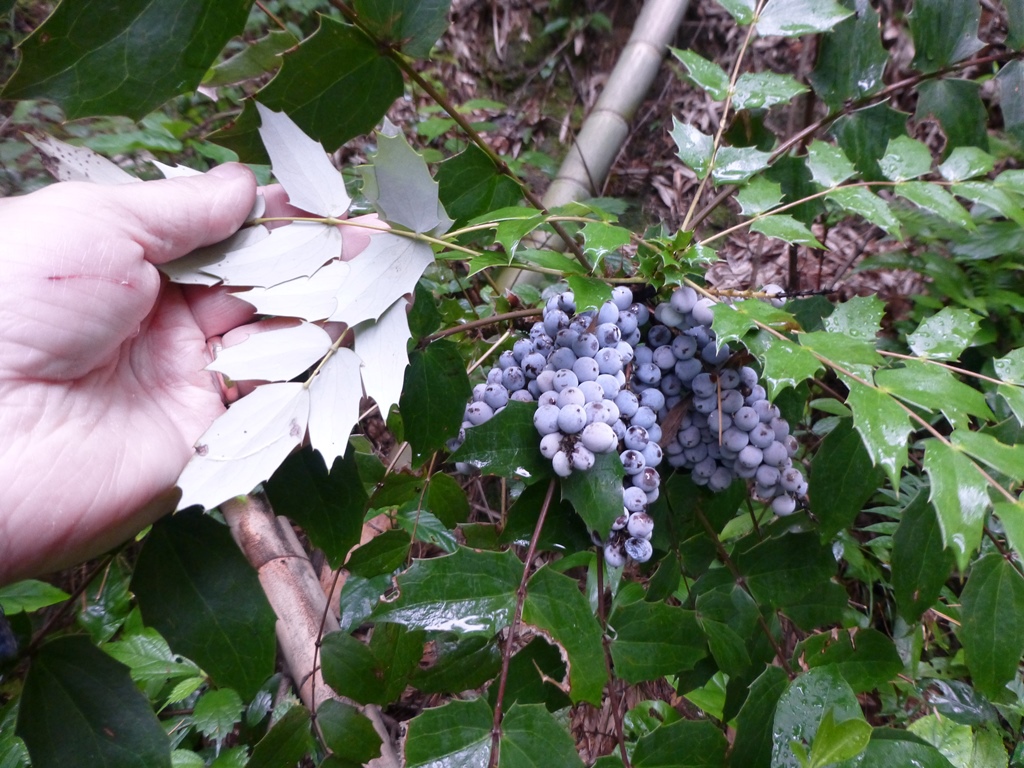
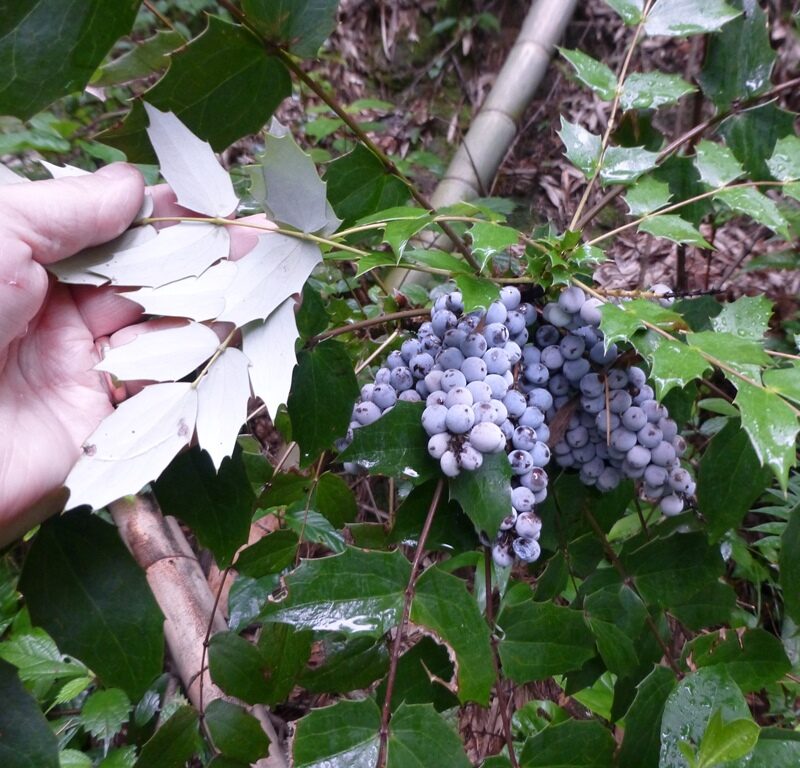
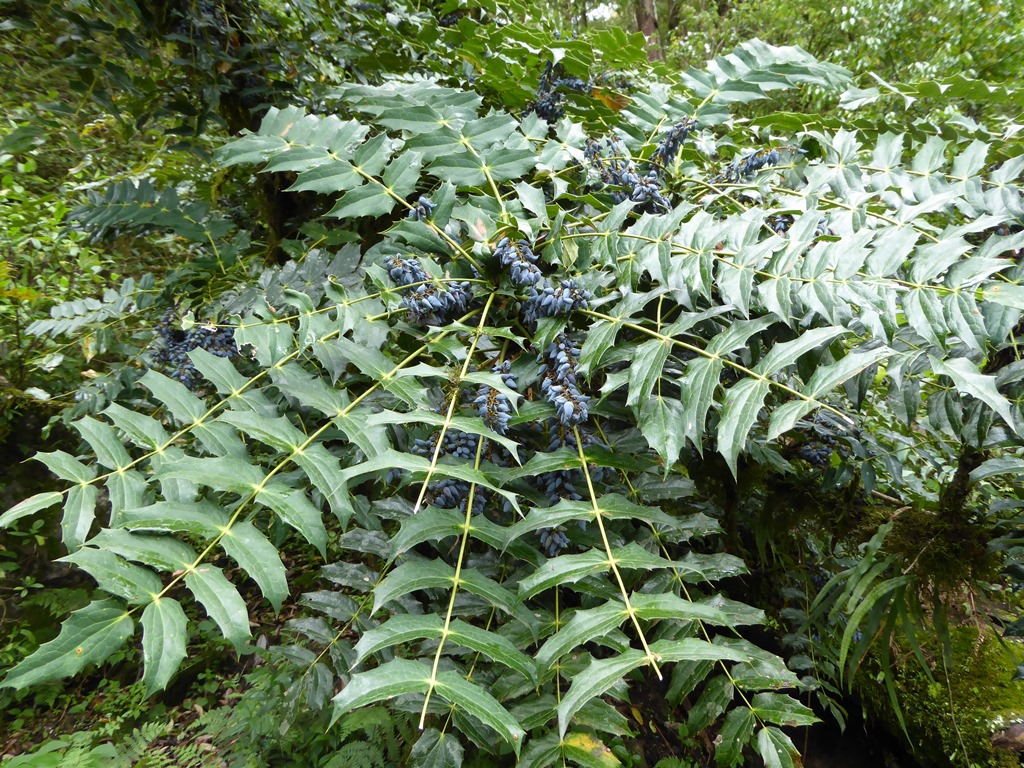
These two native species are well represented at the RSBG but the majority of our collection consists of a selection of highly ornamental and hardy species native to Asia. Throughout my many years of studying plants in Asia, my most memorable encounters with Mahonia species would include the following four observations. The first was in 2012 in eastern Guangxi when I came upon a large plant of Mahonia bealei in full fruit. The glossy and toothed foliage was bright glaucous white beneath, and the plant had huge bunches of bright blue fruits in large clusters. A stunning sight.
-
- Mahonia-eurybracteata-subsp.-ganpinensis-Sichuan
-
- Mahonia-bealei-Guangxi-China
-
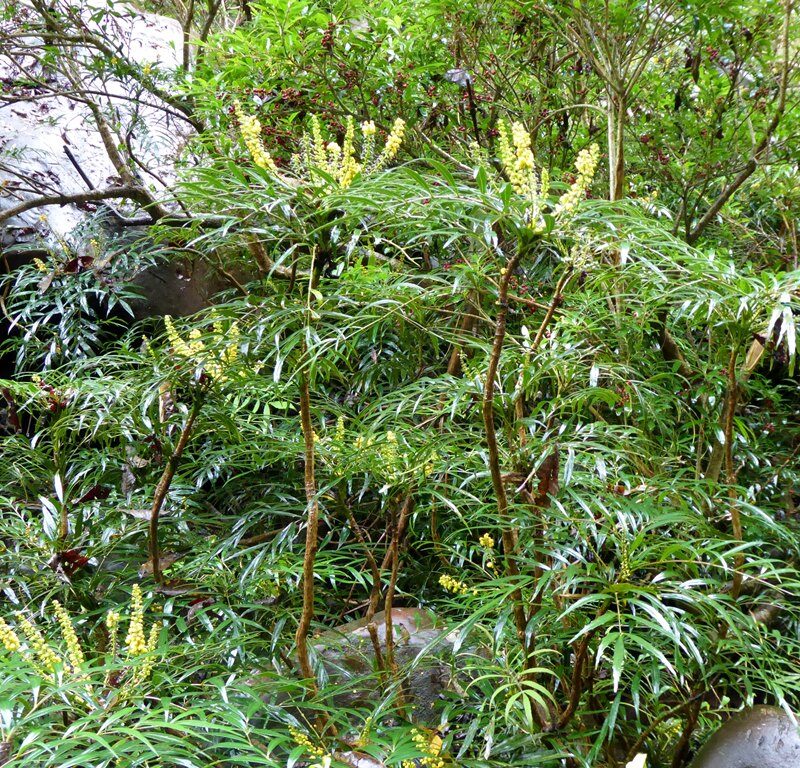
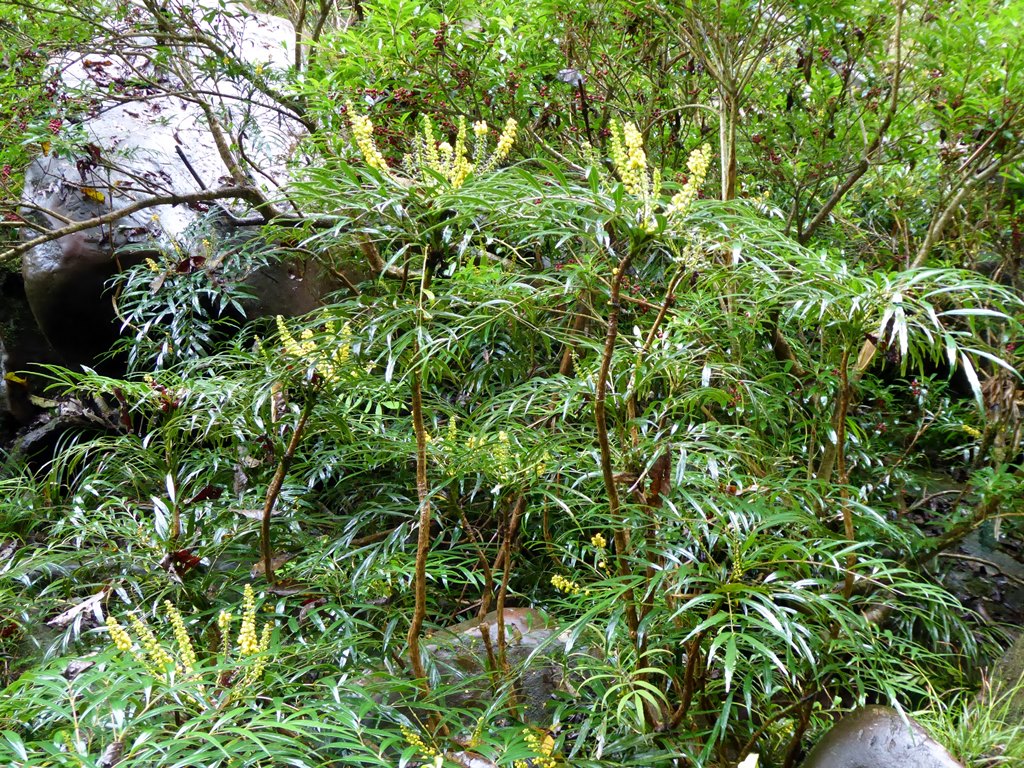
- MaMahonia eurybracteata subsp. ganpinensis, Sichuan, China
-
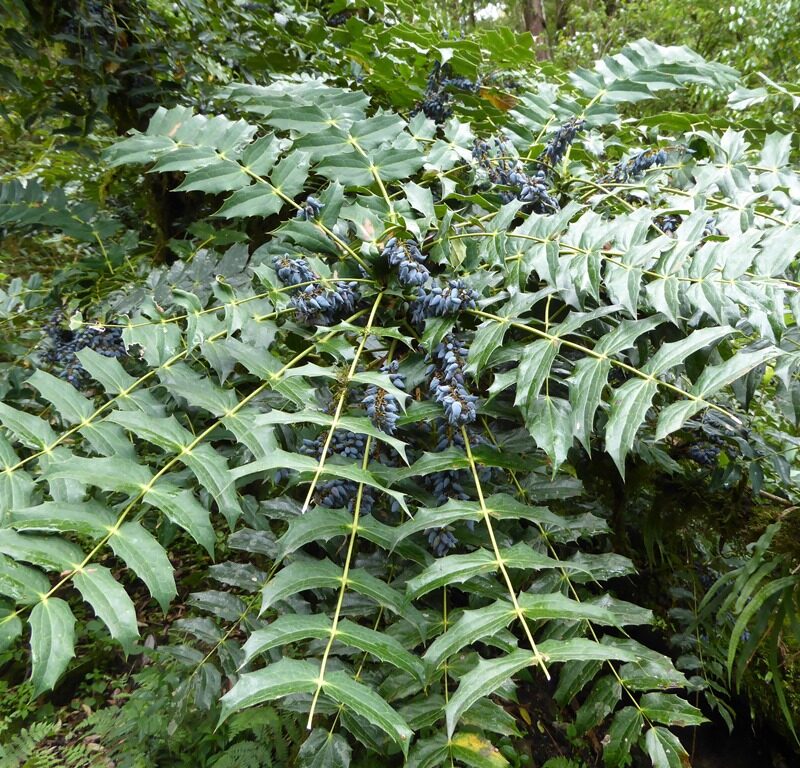
- Mahonia napaulensis in the Sikkim Himalaya
-
- Mahonia-species-nova-Hubei-China
-
- Mahonia napaulensis in the Sikkim Himalaya-
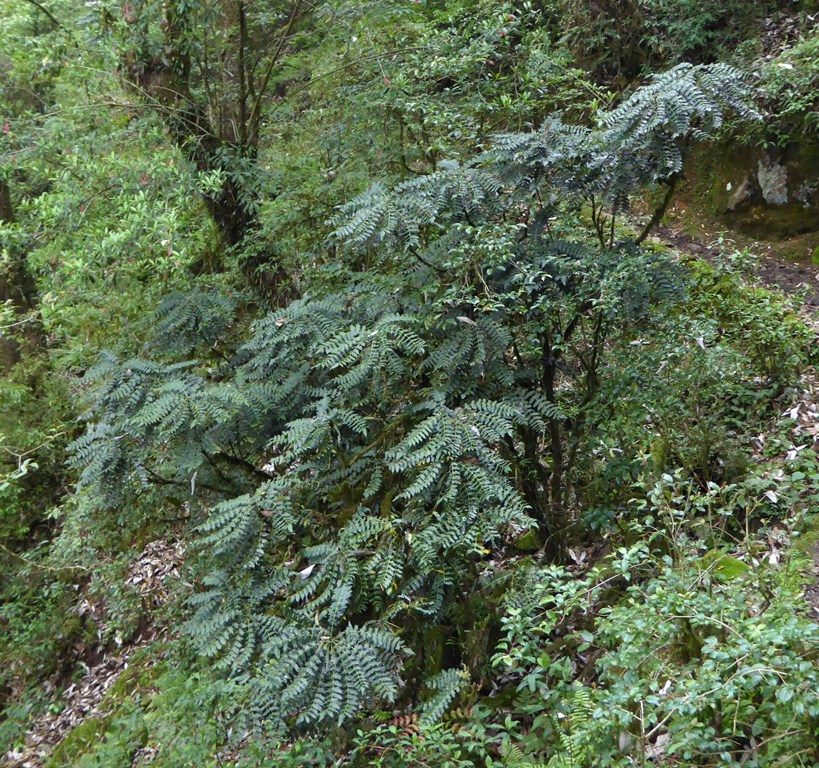
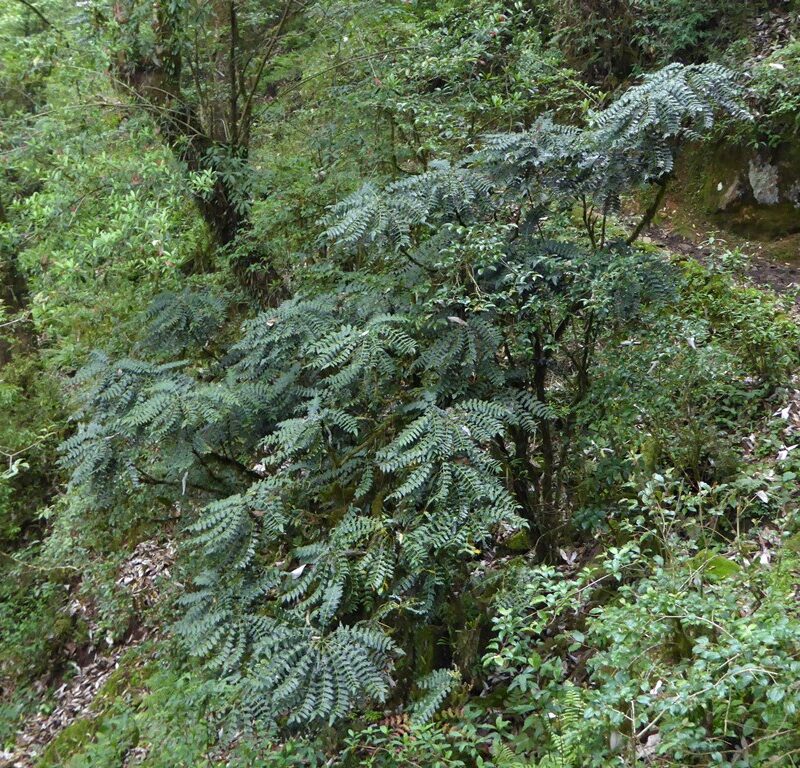
The second was on a 2015 trip to Sikkim in the eastern Himalaya. I was leading a group of RSBG members on a botanical excursion, and we were trekking and camping our way up into the high mountains. Upon reaching our first camp, I noticed large specimens of Mahonia napaulensis all around the campsite, each plant loaded with clusters of blue fruits. A magical setting with epiphytic Agapetes, orchids and ferns adorning the massive and ancient evergreen oaks that sheltered our campsite.
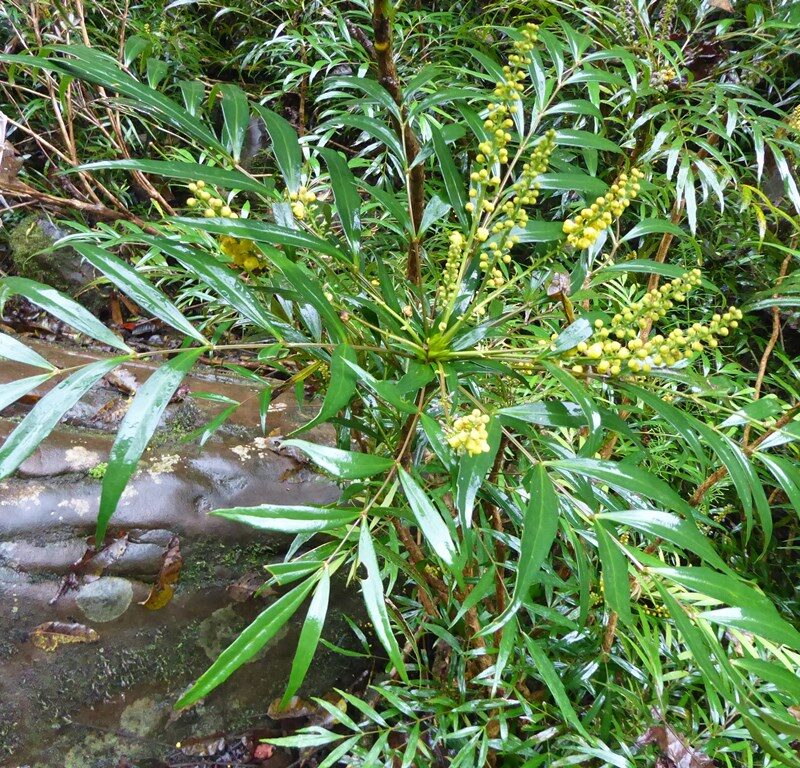
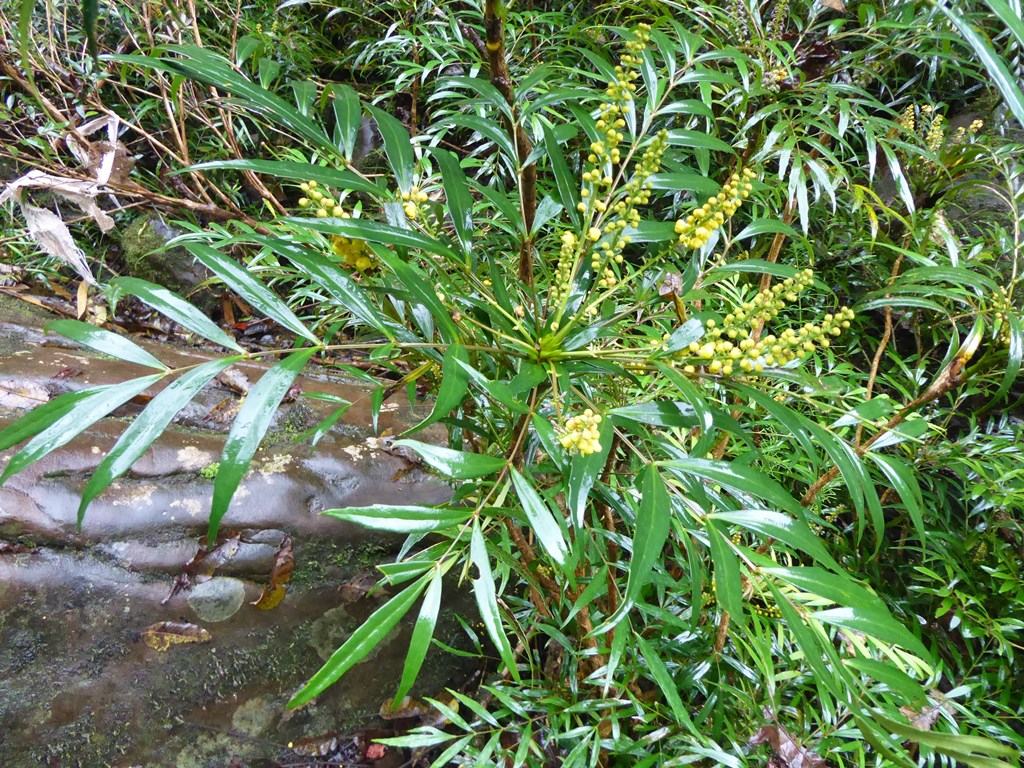
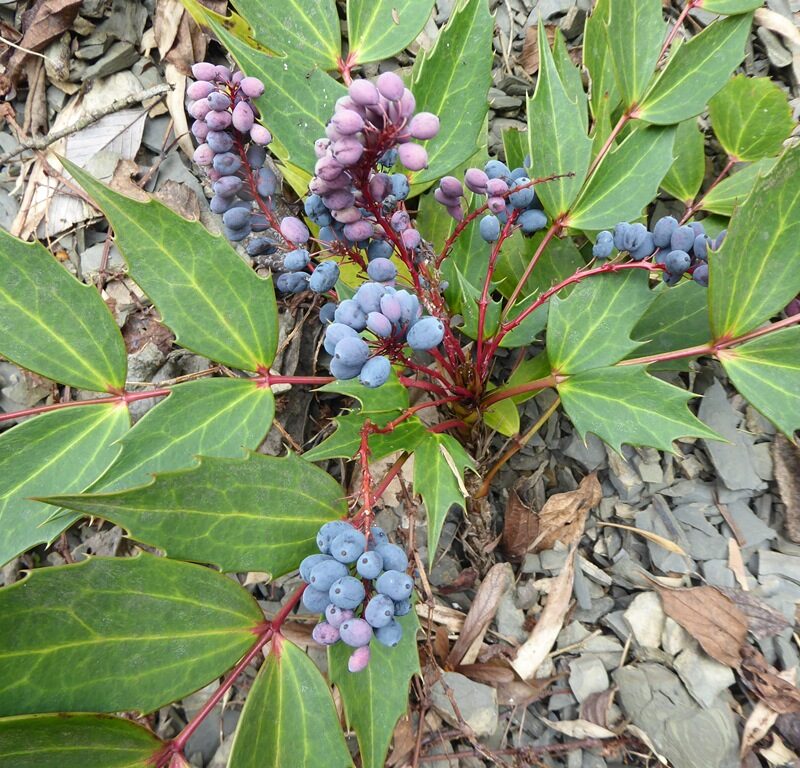
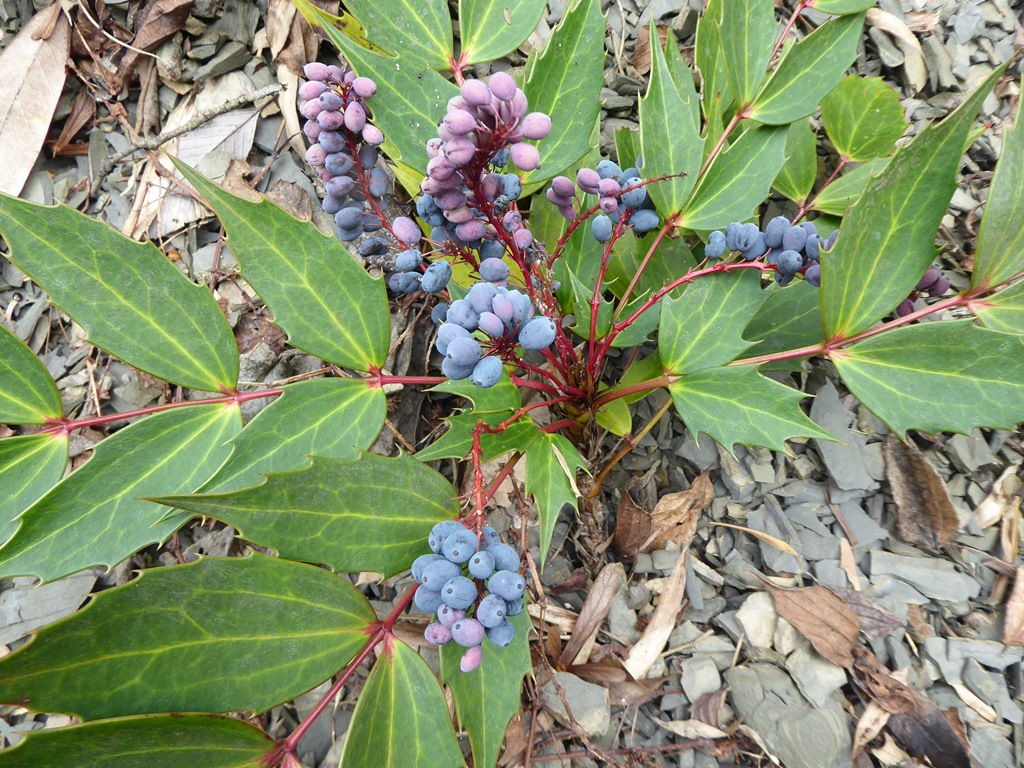
The third and fourth both occurred in November of 2025 on my most recent trip to China. This turned out to be the most Mahonia-rich of any of my trips and we observed at least a half dozen different taxa. Two of these, however, really stood out. In southern Sichuan we followed a track along a stream in a wide sandstone canyon. Here we noted large colonies of an evergreen shrub growing amongst the boulders lining the stream. Upon further inspection we realized they represented the rare Mahonia eurybracteata subsp. ganpinensi – what a fantastic display. Later that week in western Hubei, we found a few plants of an unknown Mahonia growing on a ridge in a rather dry forest with oaks, evergreen azaleas, etc. The foliage of this taxon was quite beautiful with red petioles and young stems, deep green leaflets and yellow midribs. Huge clusters of glaucous blue fruits weighed down the terminal branches. It was quite different from any other Mahonia that Tom and I had ever seen, in the wild or in cultivation. After consultation with experts back home, it was determined to be a new, as yet un-named species – a species nova. A very exciting find and one of the highlights of the entire trip.
In cultivation, both the non-native and the native species of Mahonia are grown for their attractive evergreen foliage, masses of yellow flowers (they are magnets for hummingbirds) and attractive blue fruits. They are especially useful in those situations where other evergreens (such as rhododendrons) might not thrive – shady and dryish areas for example, and many of them have unusual bloom times. They are easily grown from seed, although, like rhododendrons, they tend to hybridize when different species are grown in close proximity to one other. They are also quite easy from cuttings. The majority of selections regularly available in nurseries are cultivars of the hybrid Mahonia x media (japonica x lomariifolia) which are all easily-grown and beautiful plants. The species and more unusual hybrids are only occasionally offered by specialist nurseries.
A list of the current (and rapidly growing) inventory of the taxa we are cultivating at the RSBG is included here for your amusement. If you have a chance to visit the garden, keep an eye out for some of these special plants and enjoy the colors, texture and architecture of this incredible genus.
SPECIES
• Mahonia aquifolium (native on site)
• Mahonia bealei SEH#12005
• Mahonia bodinieri SEH#22504
• Mahonia confusa DJHC#837 ‘Indianola Silver’
• Mahonia eurybracteata
• Mahonia eurybracteata DJH#
• Mahonia fortunei DJHC#751 ‘Dan Hinkley’
• Mahonia gracilipes
• Mahonia nervosa (native on site)
• Mahonia nitens
• Mahonia oiwakensis subsp. lomariifolia Cox#6509
• Mahonia oiwakensis subsp. lomariifolia DJH#
• Mahonia nitens (a Mikinori Ogisu collection)
• Mahonia sheridaniana (fargesii)
• Mahonia species nova SEH#22519
• Mahonia takachimensis
• Mahonia tikushiensis
HYBRIDS
• Mahonia x media (several cultivars; these are the most readily available and the best for general garden culture; including ‘Arthur Menzies’, ‘Charity’, and ‘Underway’)
• Mahonia x savilliana
• Mahonia ‘Greed’
• Mahonia ‘Lust’
• Mahonia ‘Ozzie Johnson’
Questions or comments? Email Steve directly at Steve@RhodyGarden.org