
Steve Hootman
Download pdf
Many gardeners are probably familiar with the deciduous shrubs known as witch hazels (Hamamelis species and cultivars). Their flowers come in a wide variety of colors, and they mostly bloom outside of the spring season, generally autumn to late winter. They are large and wide-spreading shrubs that require quite a bit of space in the landscape but are well worth that space due to their off-season flowers which generally feature a fine scent, as well as for their beautiful and bright fall foliage colors. Far fewer people are familiar with the equally ornamental relatives of the witch hazels, and these other genera are not often available except from specialty nurseries. This family is one of the primary subcollections here at the RSBG and as they are currently displaying their fine fall color, this seems like an appropriate time to discuss these interesting and beautiful plants.
 The genus Corylopsis
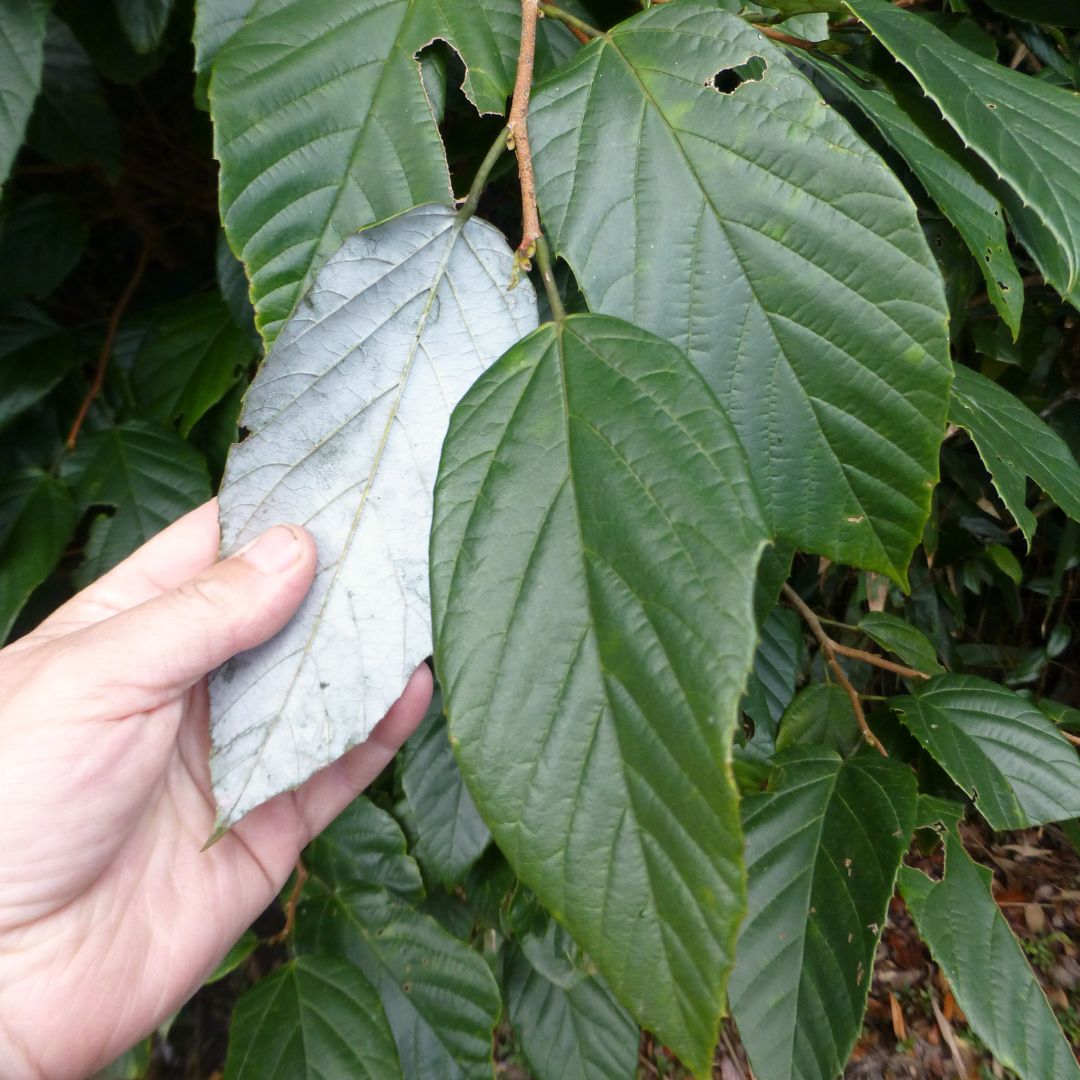
The winter hazel collection at the RSBG is one of the highlights of the early spring garden. Their fragrant and bright yellow flowers offer a nice complement to all the white, pink and red, early blooming species rhododendrons. In the autumn, the leaves (which look rather like those of a true hazel – Corylus thus the generic and common names) generally turn a fine buttery yellow. This genus is represented in the wild by about two dozen species of mostly deciduous shrubs or small trees that are native to eastern Asia. Unfortunately, unless they have been grown from wild seed, most of the plants in cultivation seem to be hybrids due to the fact that these species appear to hybridize with each other quite readily when grown in a garden setting. The genus is well represented at the RSBG but most of the older specimens are of nursery origin and so probably incorrectly named but are still outstanding ornamental specimens. The garden does have several plants of known wild origin including numerous specimens of Corylopsis sinensis, represented by the following collections: SEH#178, SEH#181 & CDHM#14588 – all from SW China. We also have Corylopsis multiflora, represented by the following collection – TH# from the Daming Shan in Guangxi, China. It is interesting that this latter species has been evergreen for us so far and features a glossy, waxy white coating on the bottoms of the leaves.
The genus Disanthus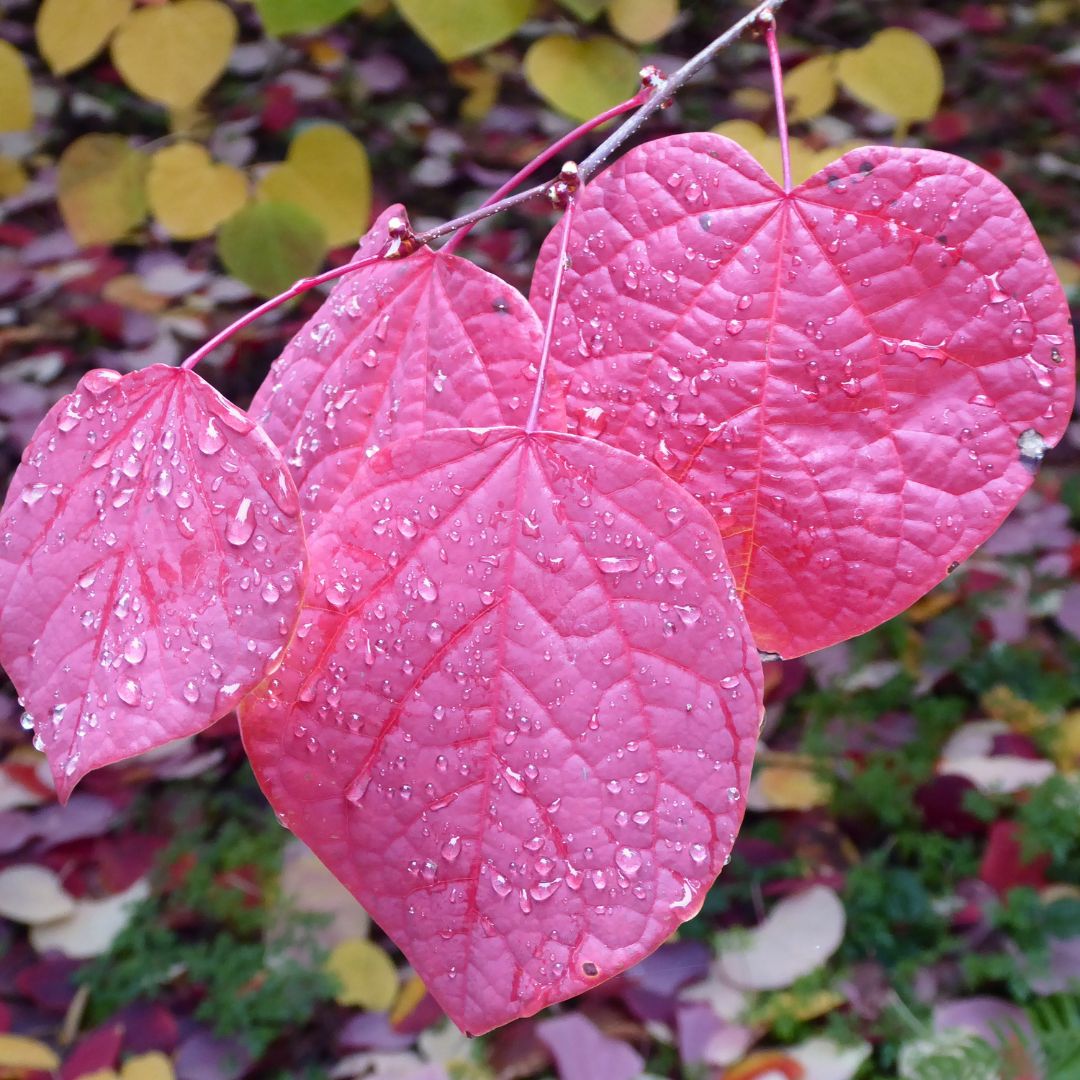
This is a small genus of only two species, one of which (D. ovatifolius from northern Vietnam) was not discovered and named as a new taxon until very recently. It is evergreen in contrast to the more familiar D. cercidifolius but with similar star-shaped reddish flowers in the autumn. This interesting species has attractive foliage that features a white-glaucous coating on the undersides of the glossy leaves. It remains rare in cultivation.
The more familiar species, long known in cultivation, is Disanthus cercidifolius which, as its name implies, does have deciduous foliage very similar in appearance to the leaves of a Cercis (redbud). This is a rare species in the wild, being confined to just a handful of locations in southern Japan and eastern China. This species has ruby-red, star shaped flowers along its stems in mid to late autumn. Most people find the odor of these unusual flowers disagreeable, but I find it quite clean and refreshing, especially on a crisp autumn day. The outstanding ornamental feature of this shrub is its fall foliage color. This species begins to shift into its autumn glory as early as August and remains brightly colored until the foliage falls in late November. During this time, the leaves slowly shift to claret red and purple with overtones of yellow and orange – truly stunning. Due to difficulties in propagation and its rather finicky nature in the garden, this beautiful shrub remains quite rare in cultivation.
 The genus Fothergilla
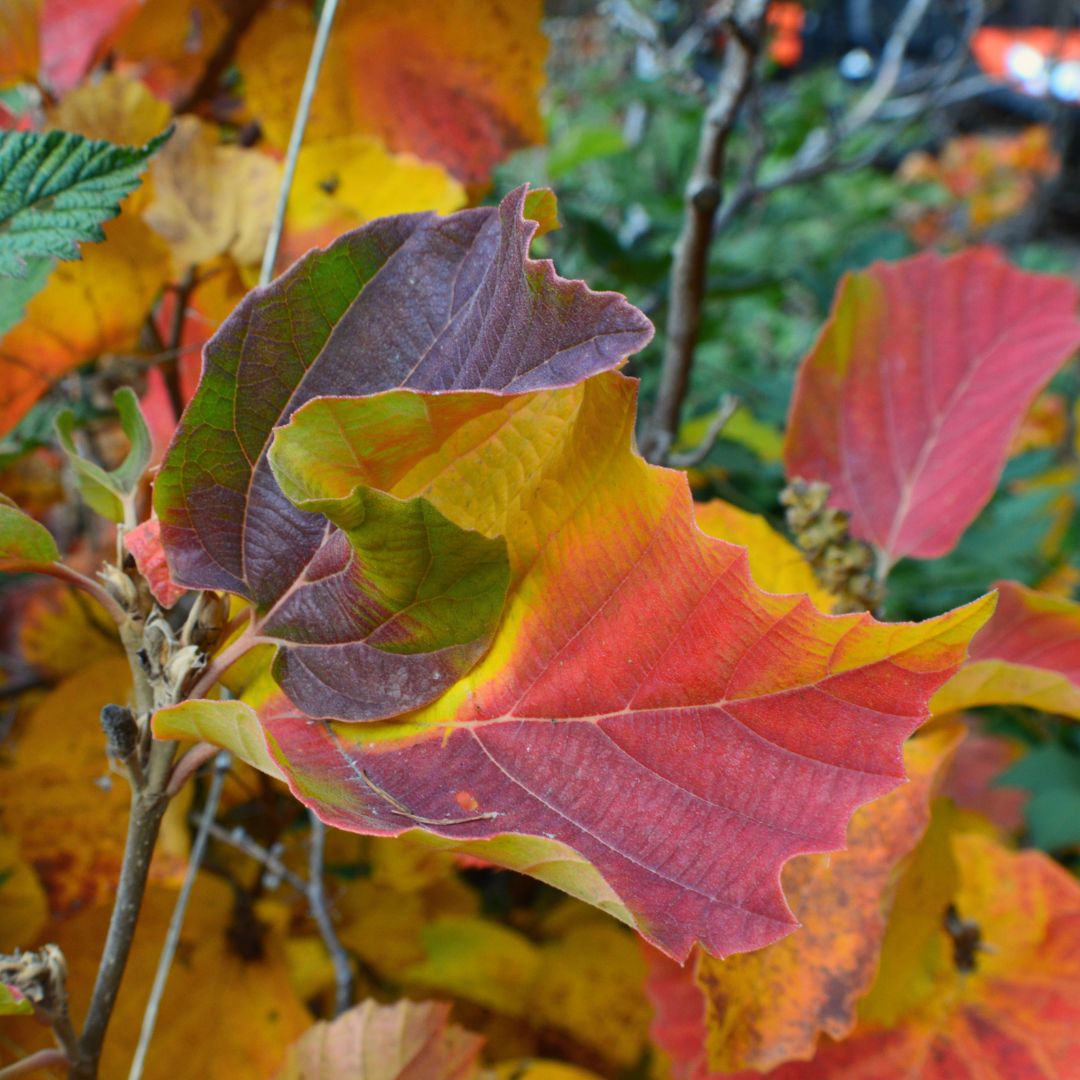
This is a small genus of four species, all native to the southeastern region of the USA. They are all small to medium sized deciduous shrubs with terminal upright spikes of white and honey-scented flowers in mid-spring. The flowers owe their beauty to the dense and clustered white stamens rather than to normal flower petals which they lack. As with many members of the Hamamelidaceae, the most outstanding ornamental characteristic of this genus is its tremendous display of colorful foliage in the autumn. We have a decent collection of this genus in the garden including three distinct clones of Fothergilla major (H&J#22064) collected by us in the wild on a RSBG expedition to the southern Appalachians. In addition to these and the many old specimens of unknown origin (although certainly obtained from a nursery), we have the following cultivars: F. gardenii: ‘Blue Mist’ with bright blue-green leaves, and ‘Harold Epstein’ a very dwarf and compact form. The majority of the plants in cultivation are actually hybrids between the species F. major and F. gardenii which are called F. x intermedia. Named varieties of this hybrid at the RSBG include ‘Mt. Airy’ a floriferous and vigorous form with outstanding foliage and ‘Blue Shadow’ which is a sport of ‘Mt. Airy’ with intense, striking powder blue leaves.
 The genus Hamamelis
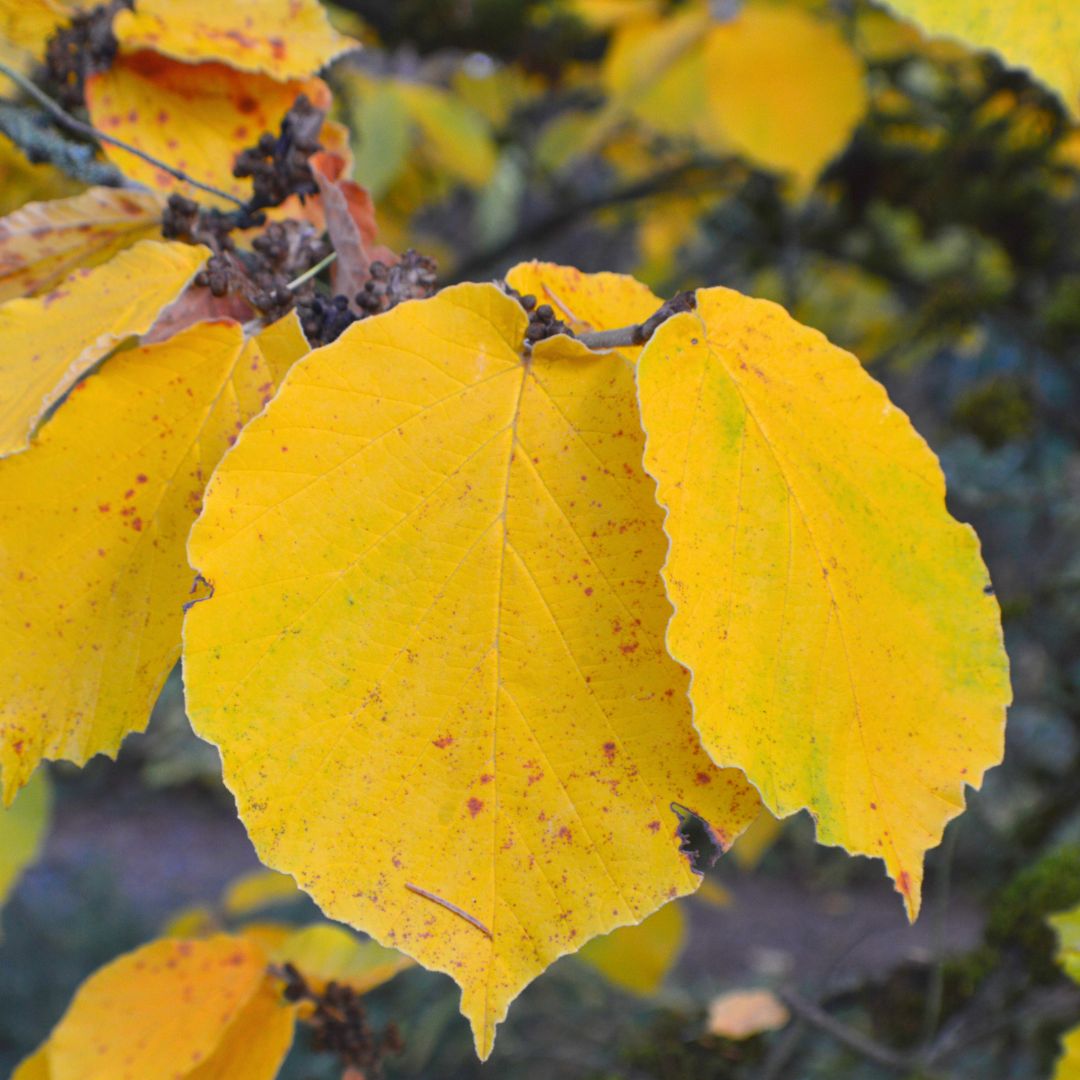
(refer to general description in the introduction) This is another small genus of deciduous shrubs with from four to five species found in both eastern North America (virginiana & vernalis) and in eastern Asia (mollis and japonica). These can grow into quite large and spreading shrubs and so I have had to avoid filling the garden with the numerous beautiful cultivars that are now available in the nursery trade. We do feature plants that are grown from seed collected in the wild, however, as this is a part of our mission here at the RSBG. We are growing H. virginiana from my wild collection (SEH#16050) in the Blue Ridge Mountains of Virginia. In 2015, during an expedition to China, I was able to find and collect seed of the native species there (H. mollis) but we were unable to germinate the seed. We do have this species in the garden, but it is of nursery origin. In addition, we were able to find seed of the species native to Japan (H. japonica) during the two RSBG expeditions to that country in 2025 & 2026 but are still awaiting germination.
The genus Liquidambar
Until recently, this genus was considered to consist of four species of deciduous trees native to temperate zones in the family Hamamelidaceae. Studies of the DNA of this group and some tropical relatives now recognizes this well-known genus as comprising a larger group of trees in their own distinct family, Altingiaceae. Since most of us in the horticultural world (including yours truly) are familiar with and still think of this genus as a member of the witch hazel family (Hamamelidaceae), I will treat it as such for this current discussion. The vast majority of plants of Liquidambar in cultivation, especially in North America, are represented by the only species native to the western hemisphere – L. styraciflua, a species found growing over a wide range, from the eastern US south through Mexico and into the mountains of Central America. This is a large deciduous tree that is tolerant of a wide range of conditions in cultivation, including water-logged and/or compacted soils and so is widely used as a street and park specimen. It features maple-like leaves that change to brilliant hues of yellow, red, orange and purple before dehiscing in late autumn, sometimes all on the same tree. The remaining species in the genus are native to Europe and Asia and are not often seen outside of arboreta and large botanical collections.
The genus Parrotia
This is a small genus of two species – to quote Trees and Shrubs Online: “Parrotia is an example of a Tertiary relic genus, of which just two representatives survive in small and widely separated forest refuges – one in the mountains south-west of the Caspian Sea in Iran and Azerbaijan (P. persica), the other in central China (P. subaequalis).” The former is a well-known and widely grown species known for its outstanding fall color as well as its adaptability in the landscape, being tolerant of a wide range of conditions including freezing temperatures and drought. It is now represented in cultivation by numerous horticultural varieties and is even used as a street tree in many situations. In cultivation, this species typically forms a large and wide-spreading deciduous shrub or small tree although it is known to be quite variable in the wild with some specimens forming tall trees with single straight trunks. The flowers appear in late winter as small star-shaped clusters of showy red sepals along the bare stems.
The latter species – P. subaequalis, is an endangered species with only around one hundred mature trees known to still survive in the wild. It is a relatively recent introduction into cultivation and is quite rare even in botanical collections. It is very similar in general appearance to its well-known relative, differing in minor botanical details as well as the incredibly disjunct native ranges. In addition to all the outstanding horticultural characteristics exhibited by these two species, they also feature beautiful and colorful exfoliating bark as the trunks mature.
The genus Rhodoleia
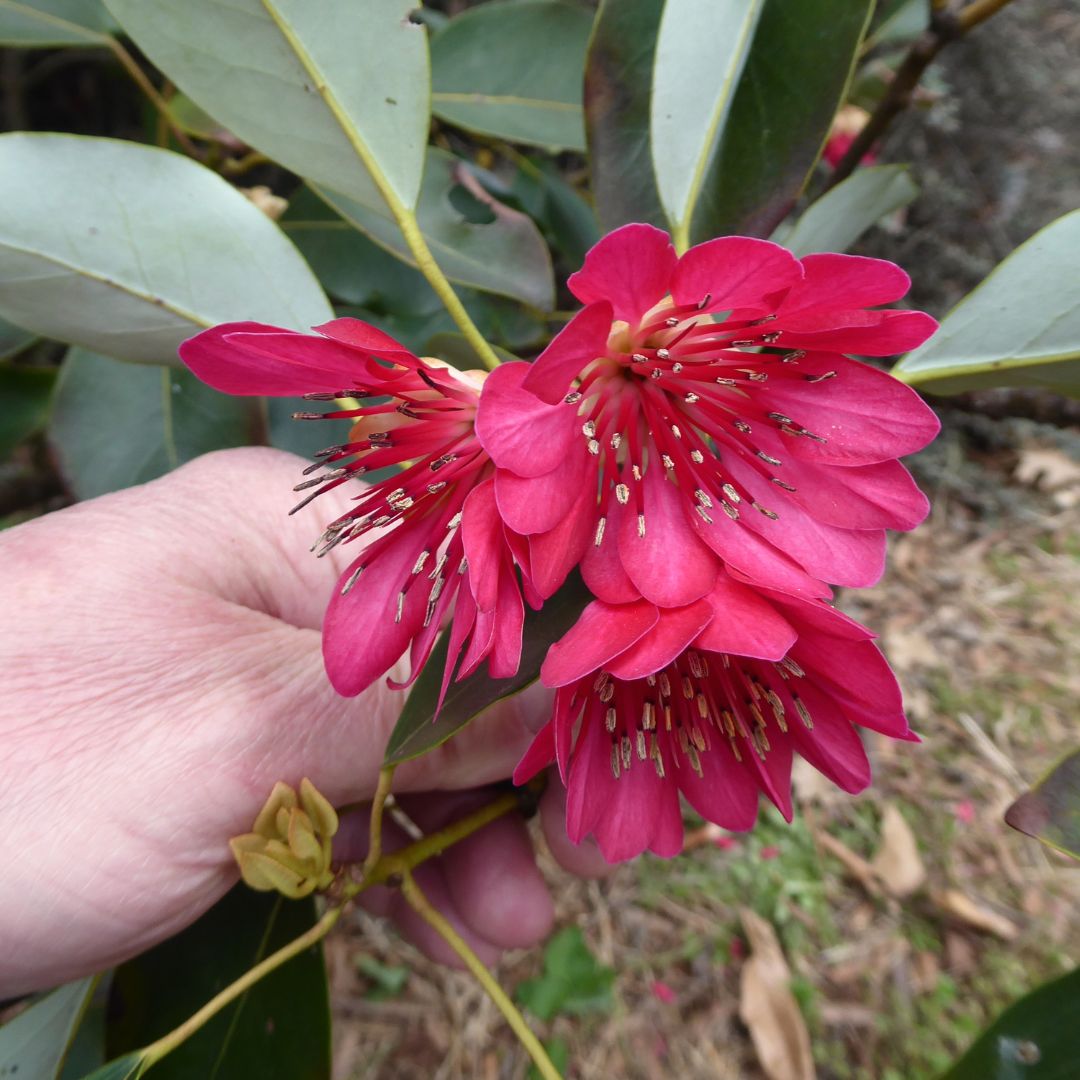
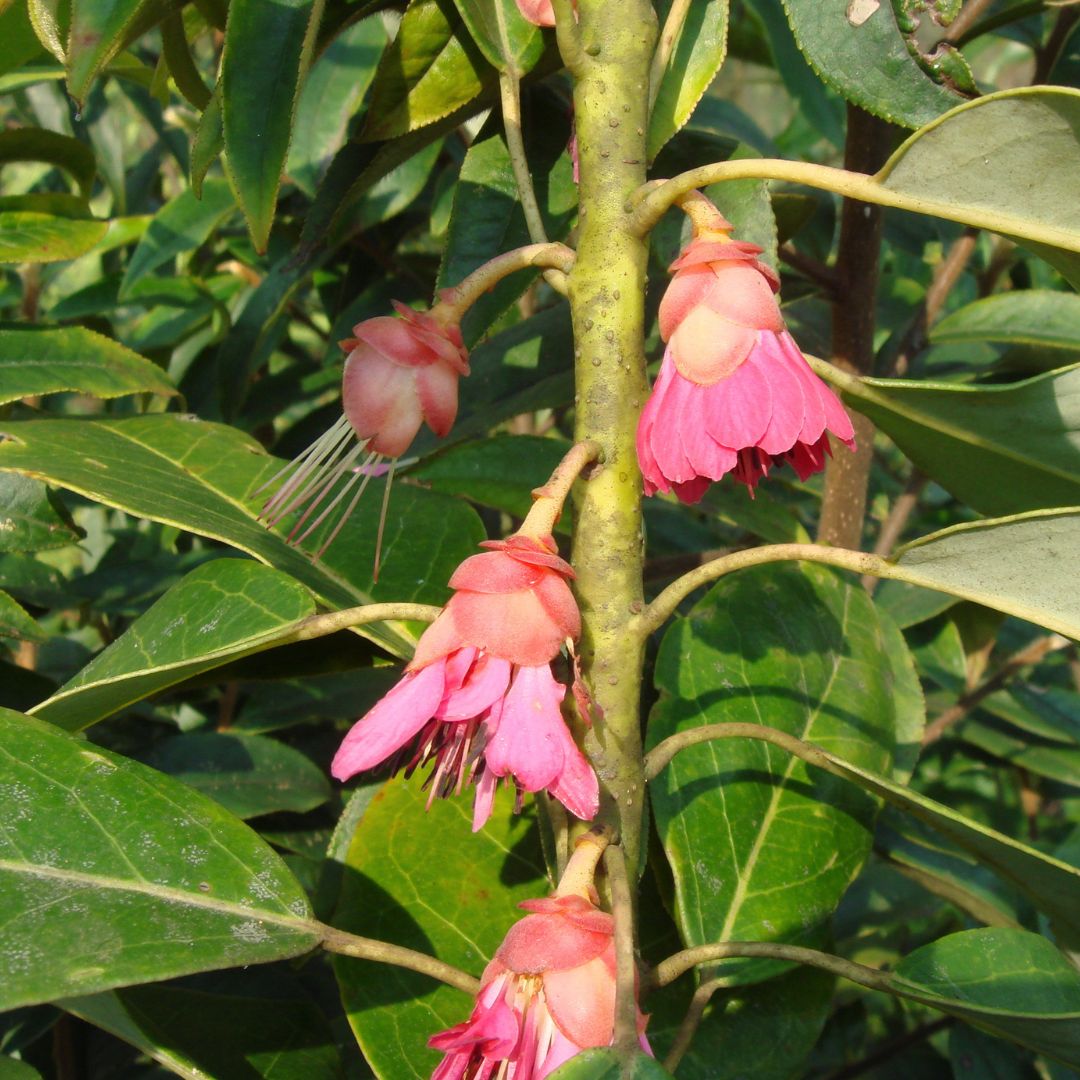 Hamamelidacea_Rhodoleia-parvipetala This is another rather small and very poorly known genus consisting of six to ten species of evergreen trees native to southeastern Asia, from China south into Malaysia and Sumatra. The majority of these species are probably not reliably cold hardy in most temperate regions, but we are trialing a few of the species native to China and Vietnam. The species in this genus can eventually form quite large trees with glossy deep green foliage covered with a glaucous white bloom on the lower surface of the leaves. The large and showy flowers are borne along the stem and range from pink to deep red. They look like hanging bells with a mass of fringed petals – quite striking. So far, we have had the best luck with my collection from the Yunnan/Vietnam frontier, a species called
The genus Sinowilsonia
This is a monotypic genus (only one species in the genus) represented by the Chinese native – S. henryi. This botanical curiosity has little to offer ornamentally with non-showy flowers and good, but not outstanding fall foliage color as seen in most of the rest of this large family. It was first introduced by Ernest Wilson from the forests of central China for the Arnold Arboretum in 1908. It forms a wide-spreading deciduous shrub that eventually develops into a specimen very similar in appearance to that of the common witch hazel. It is very rarely offered for sale, although the RSBG has listed it in recent catalogs.
The genus Sycopsis
This is a small genus of three species of evergreen shrubs or small trees. They are rarely seen in cultivation, even in large arboreta and botanical collections. The most common of the three in cultivation is the species Sycopsis sinensis which is probably also the hardiest. It features thick and leathery, shiny evergreen leaves and early spring flowers consisting of short spikes of feathery yellow-reddish flowers made up of masses of sepals and stamens. Our single specimen of this genus is grown from seed collected in the wild by our good friends at Far Reaches Farm (MD#12-800).
Questions or comments? Email Steve directly at Steve@RhodyGarden.org